
SZSZ
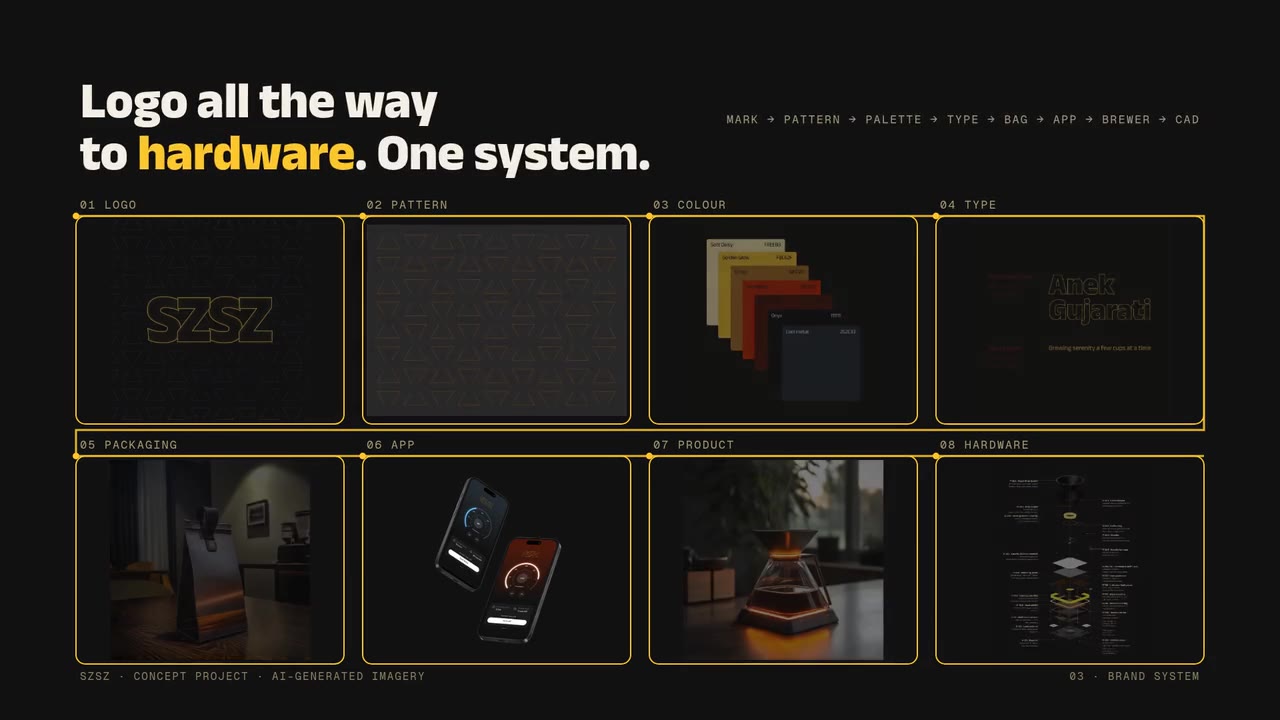
SZSZ didn't start as a coffee maker. It started on a run, when I decided I wanted to make a cool logo out of letterforms alone. The combination I landed on was SZSZ, and only then did I ask what product could belong to that logo. The answer was a coffee maker.
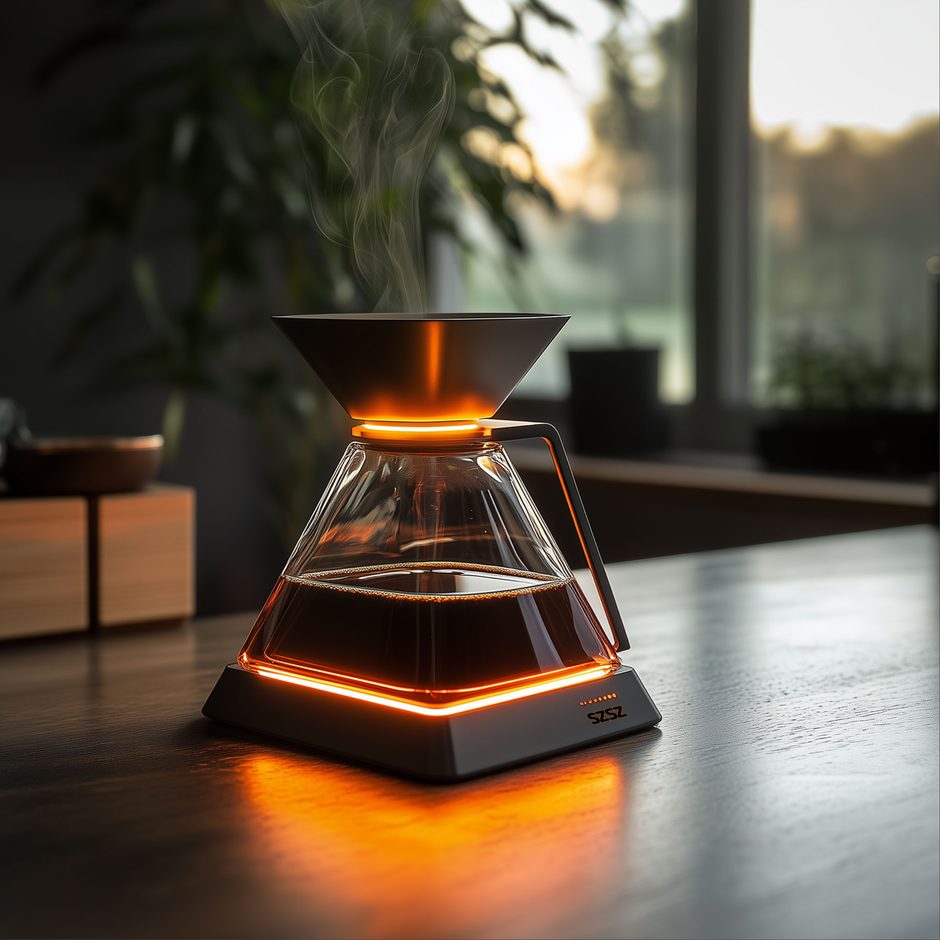
From there I built the whole product backward. Midjourney gave the brewer its form: a faceted glass carafe inside a tapered pyramid frame, under an inverted filter cone, on a dark base with an amber light ring. I built the brand and the companion app around it, and then kept going, all the way backward toward manufacturing. I made it in 2024, before Acho. It's a concept, not a shipping product.
Time Range

How it was built
- 1Four lettersA letterform logo, drawn by hand.
- 2A form to fitA Midjourney brewer shaped around the mark.
- 3Image to 3DA Meshy AI model from the chosen image.
- 4Brand and appType, palette, packaging and a brew app.
- 5Toward manufacturingConcept CAD, drawings and a parts list.
Four letters first
Most products get their logo last. SZSZ got its logo first, and everything else had to answer to it. The wordmark, drawn by hand in heavy outlined letters, is where the project begins. The coffee maker was the product that fit it. Then the brewer needed a body. Image models are very good at making an object look finished, with perfect light on glass that no one could mold or a base with no room for a heater, so I treated the Midjourney still as a design brief. It set the silhouette, the mood and the material story. Every later step, from the brand to the app to the engineering, had to keep those while making the thing plausible.
From prompt to form
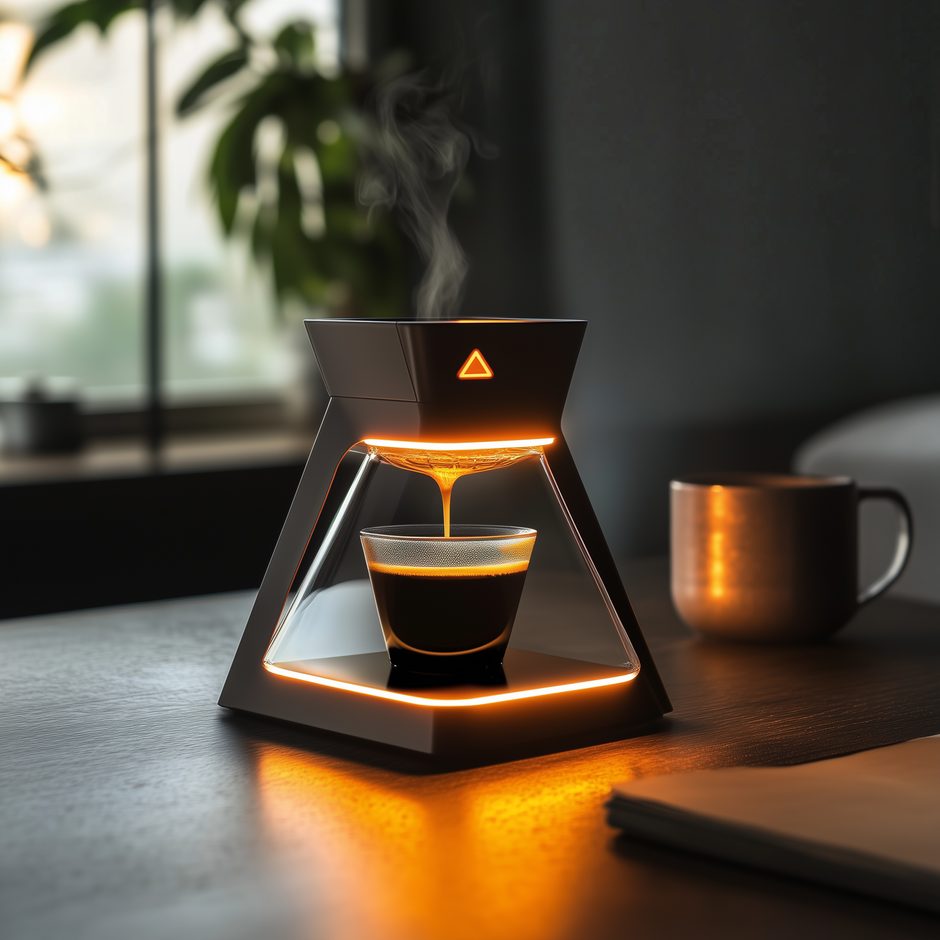
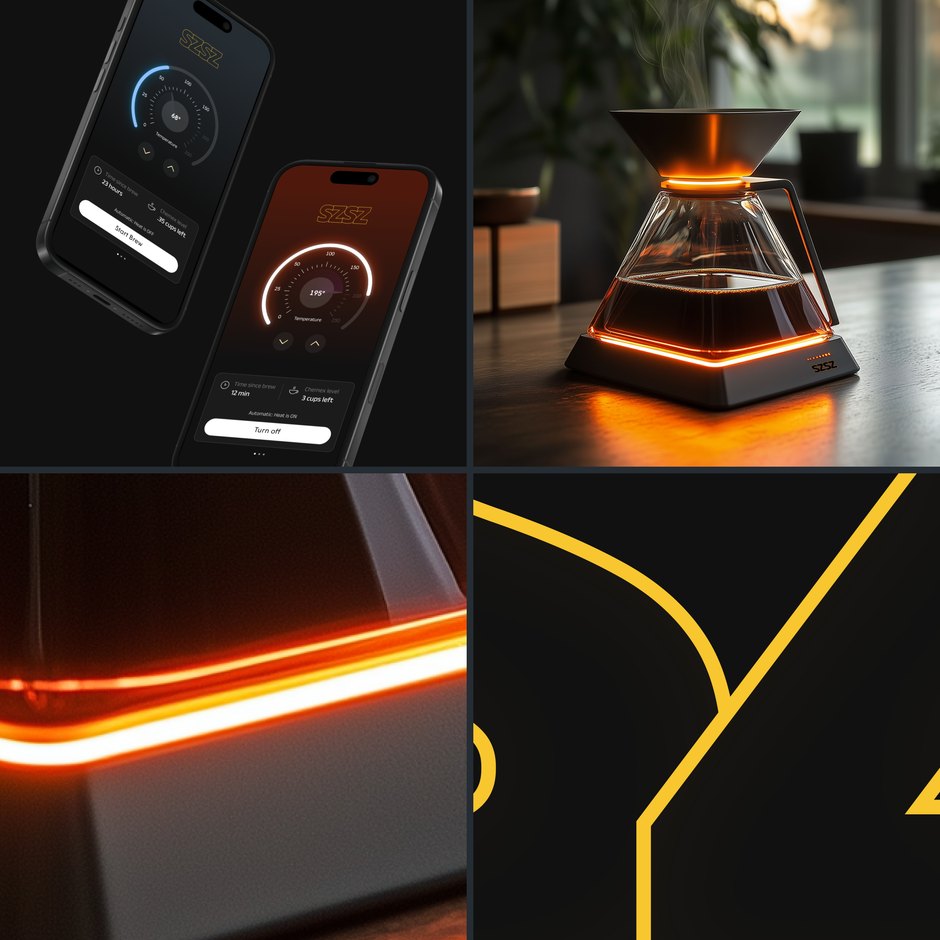
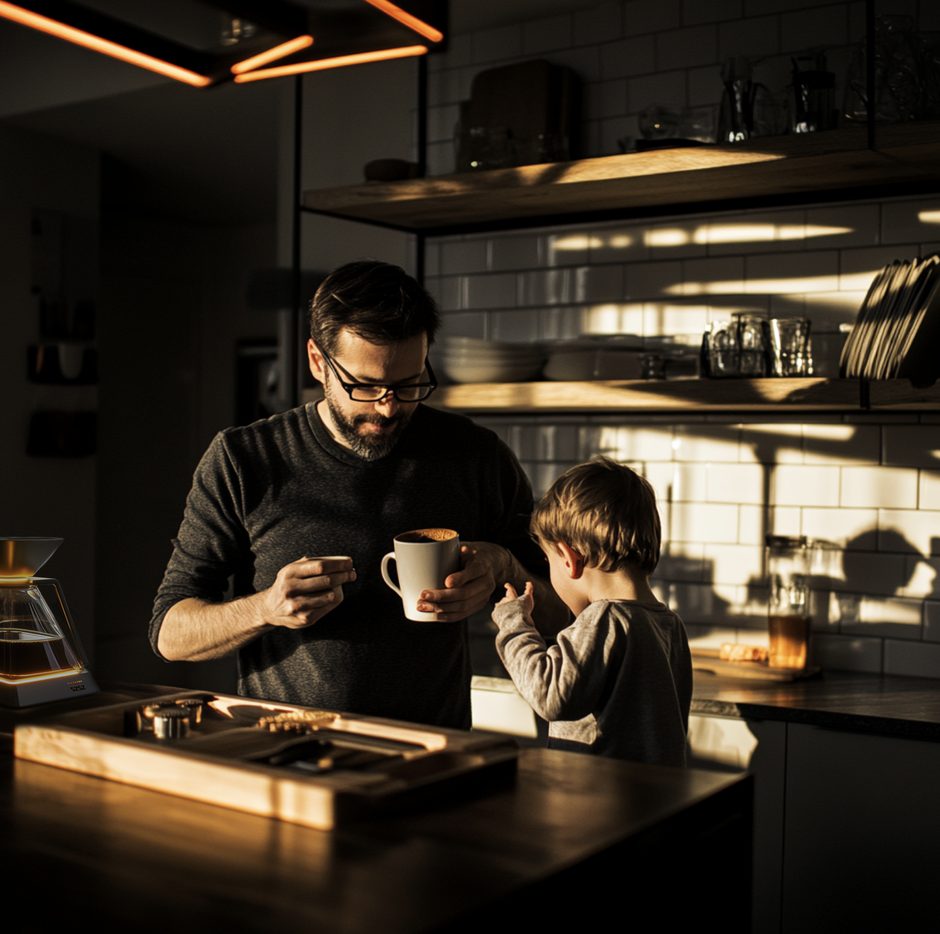
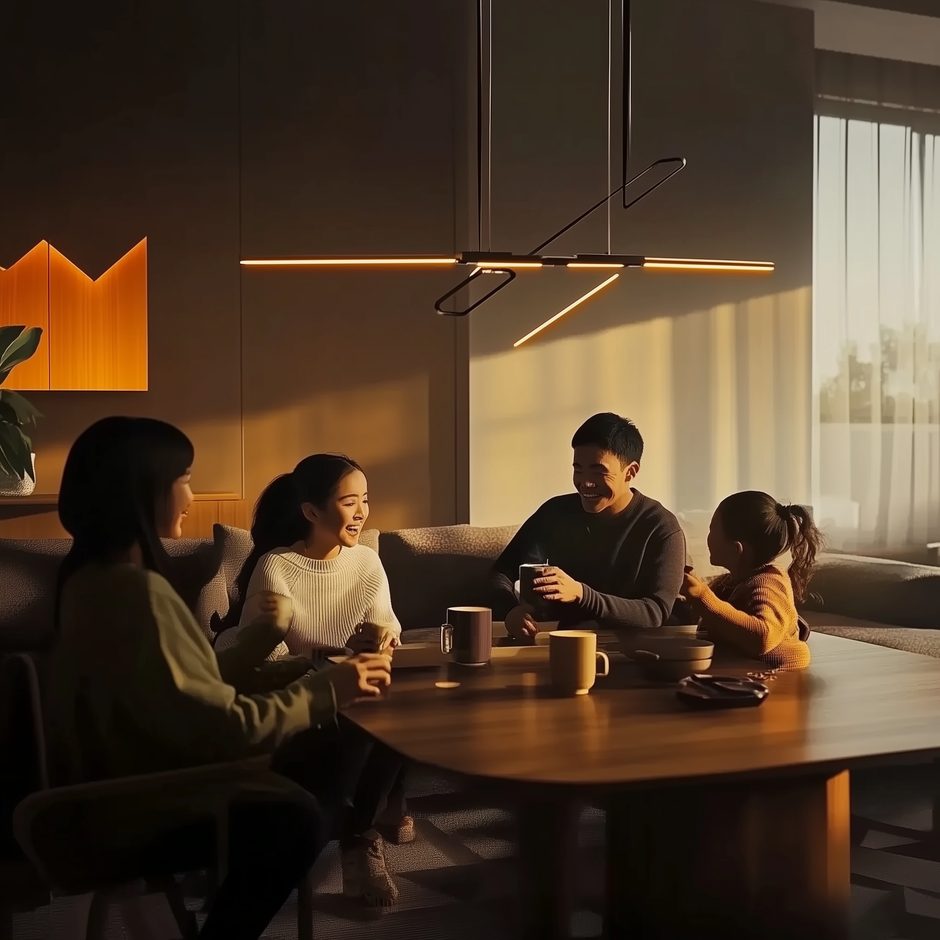
Two forms came out of the early rounds: a single-cup hourglass with a dark pyramid shell, and a pour-over with a metal cone over a glass pyramid carafe on a square, amber-lit base. The pour-over held up best, and it became SZSZ. The same visual language then built the scenes it lives in. Dark kitchens lit warm, family tables, a counter at dusk, a pour caught mid-stream. Product and world were art directed together, so the brewer never looks pasted into its photos.
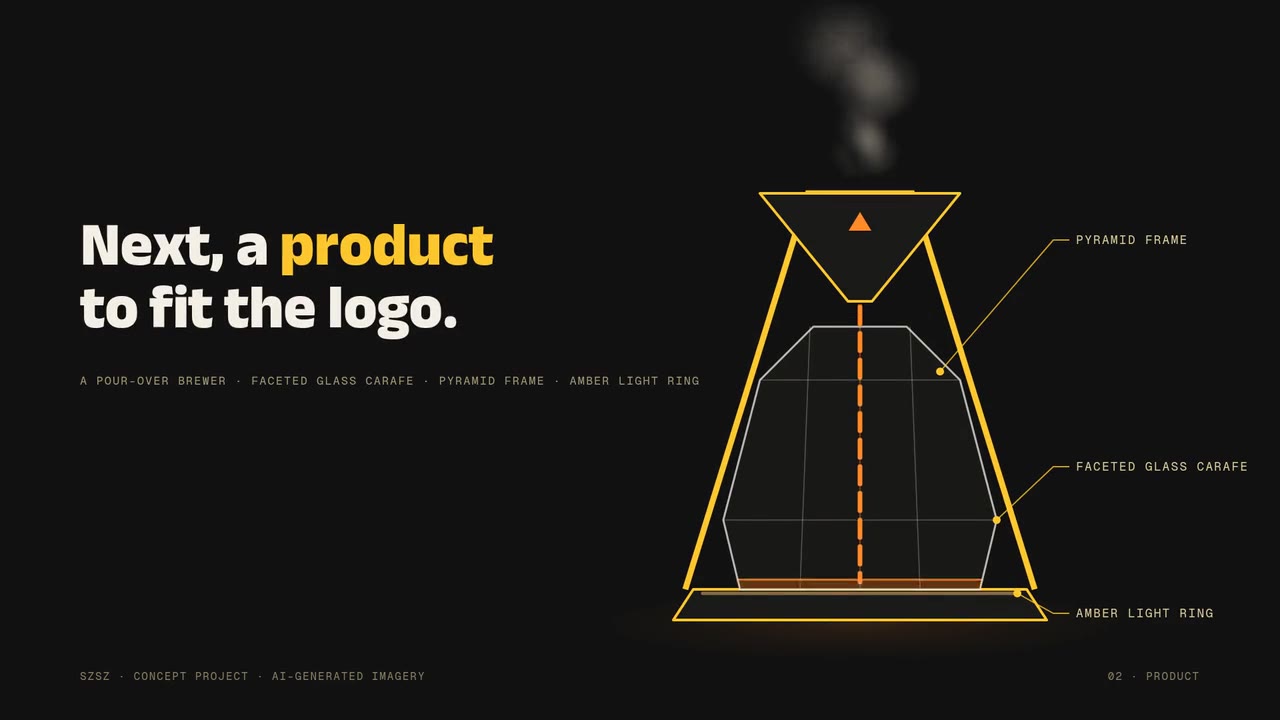
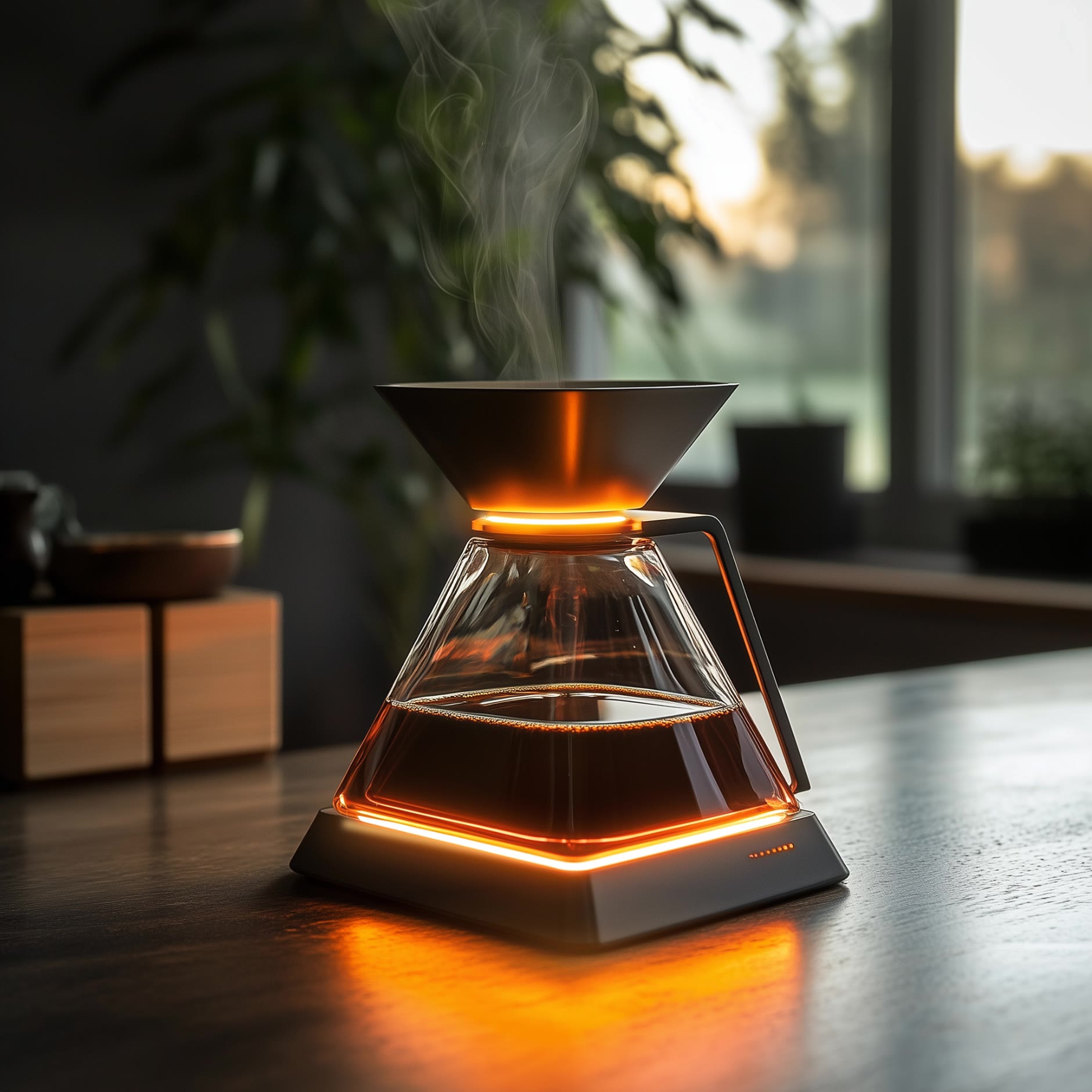
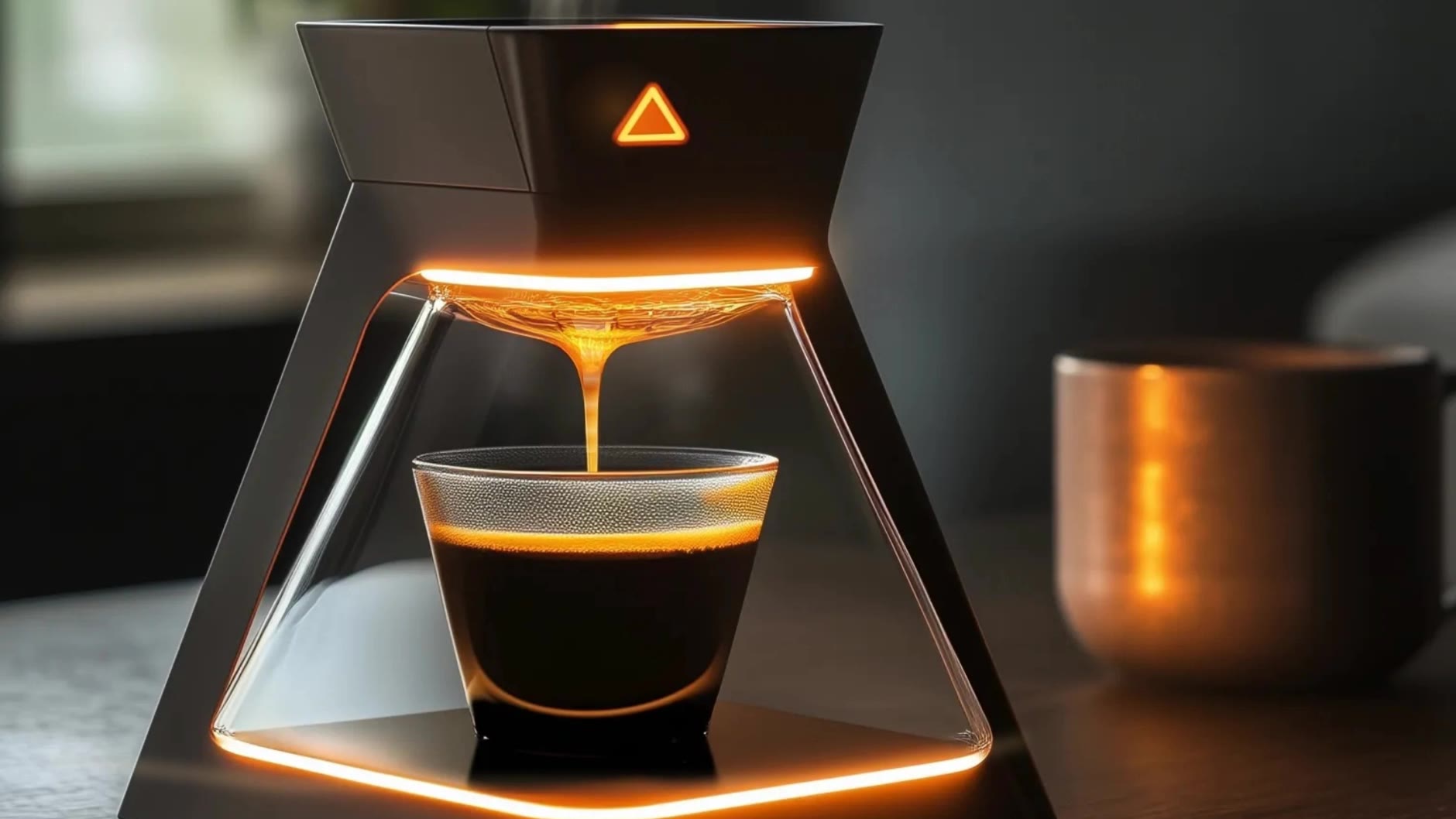
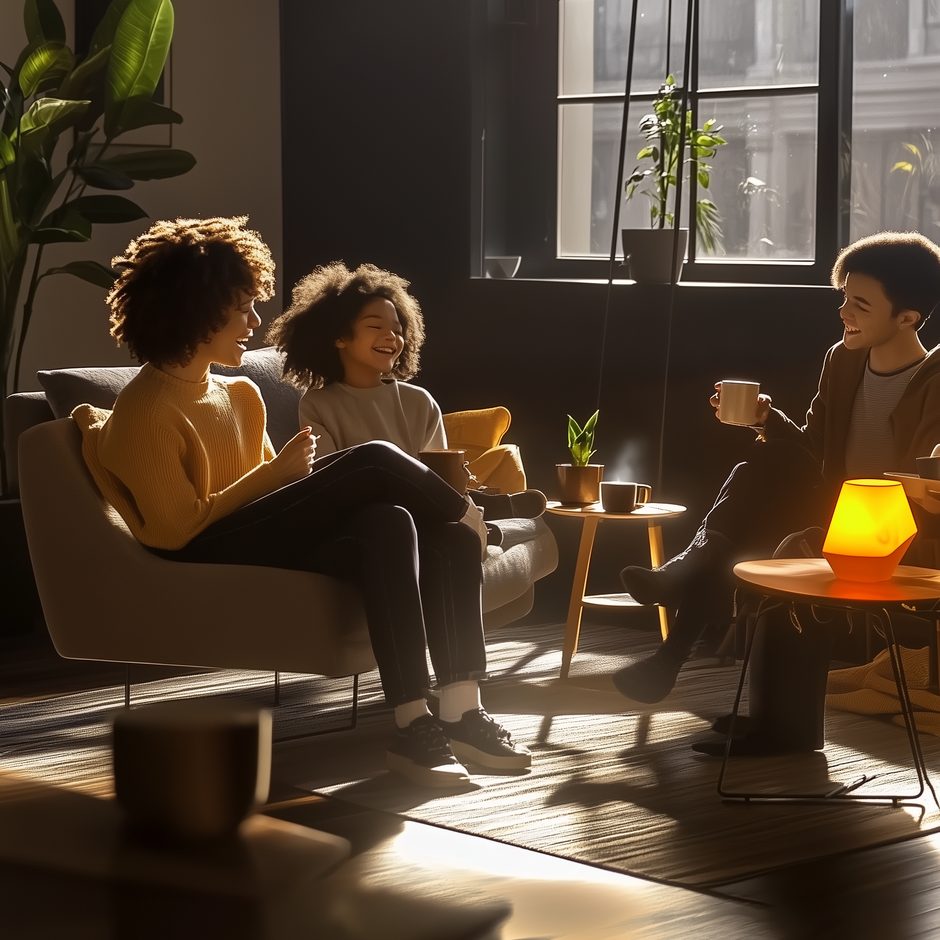
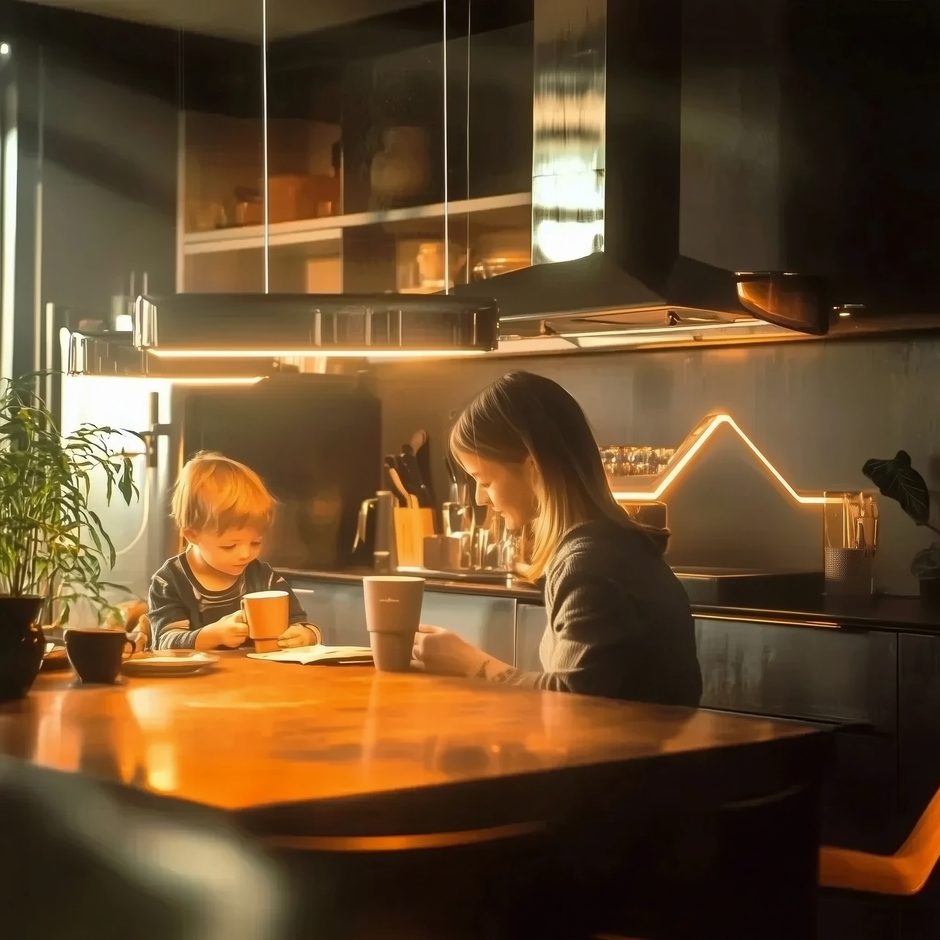
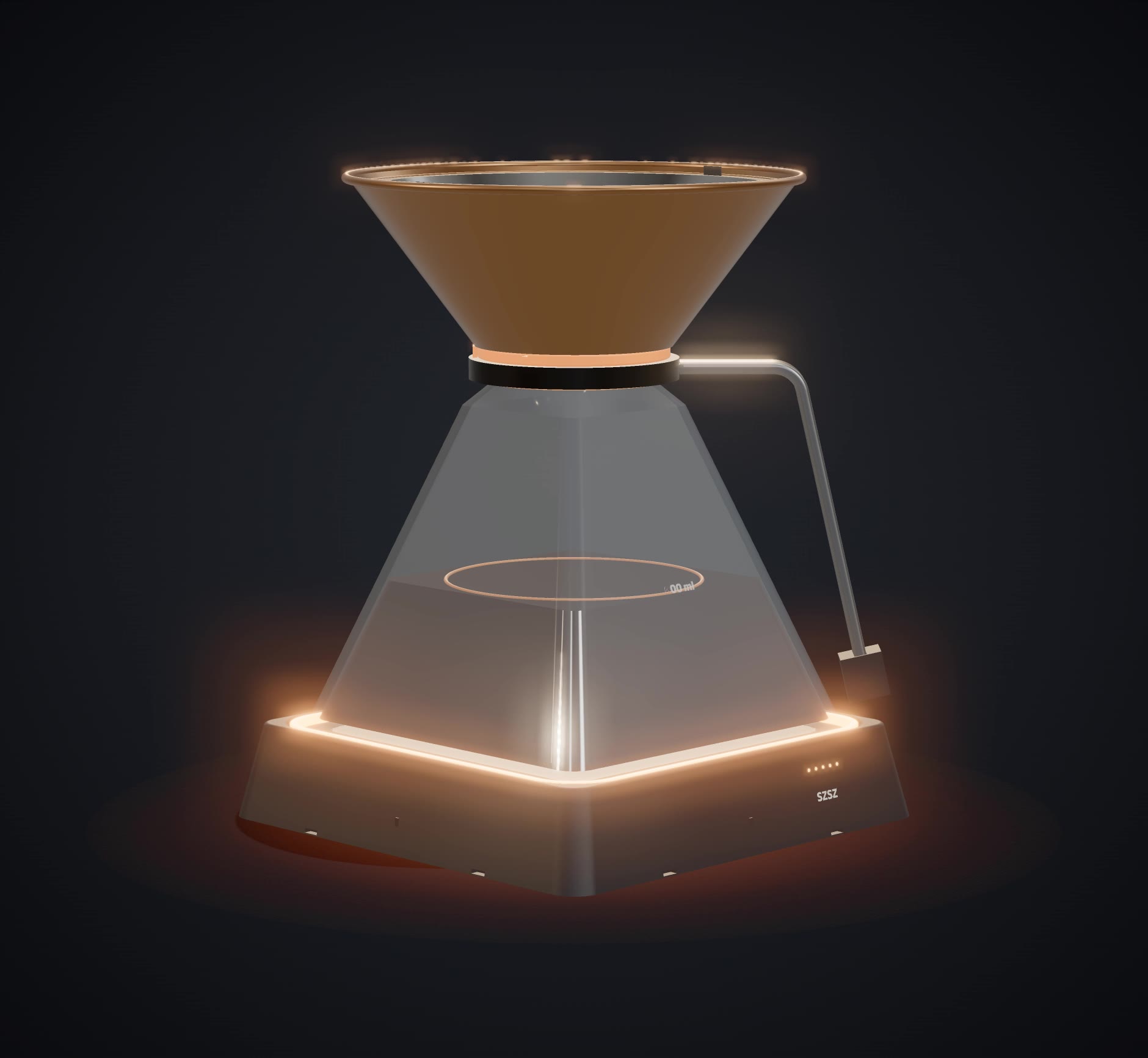
Image to 3D
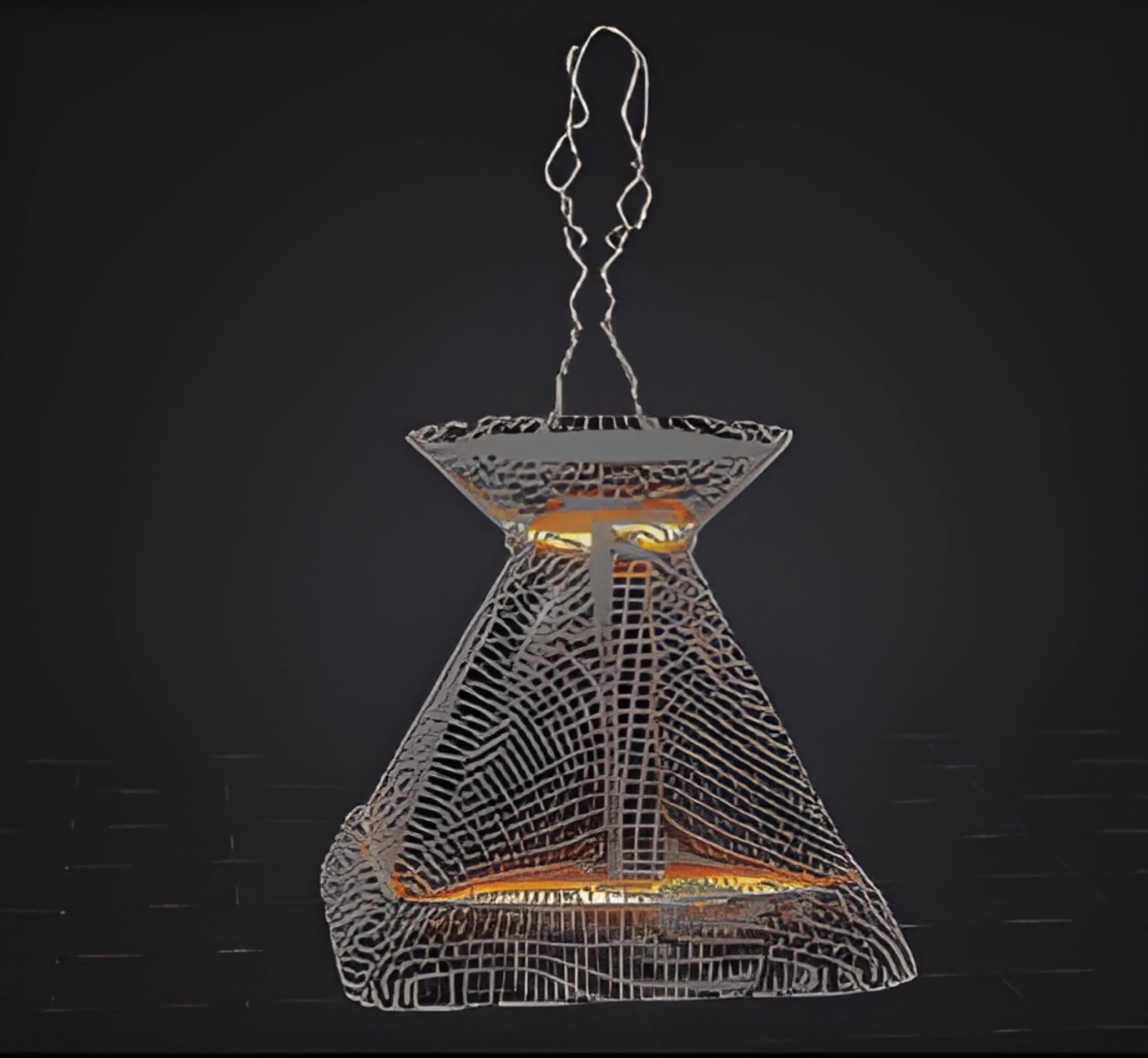
Meshy AI converted the chosen still into a 3D mesh. The wireframe and textured turntables are the first honest check, because they show whether the form holds from every angle and not just the one the image picked.
Worked backward toward manufacturing
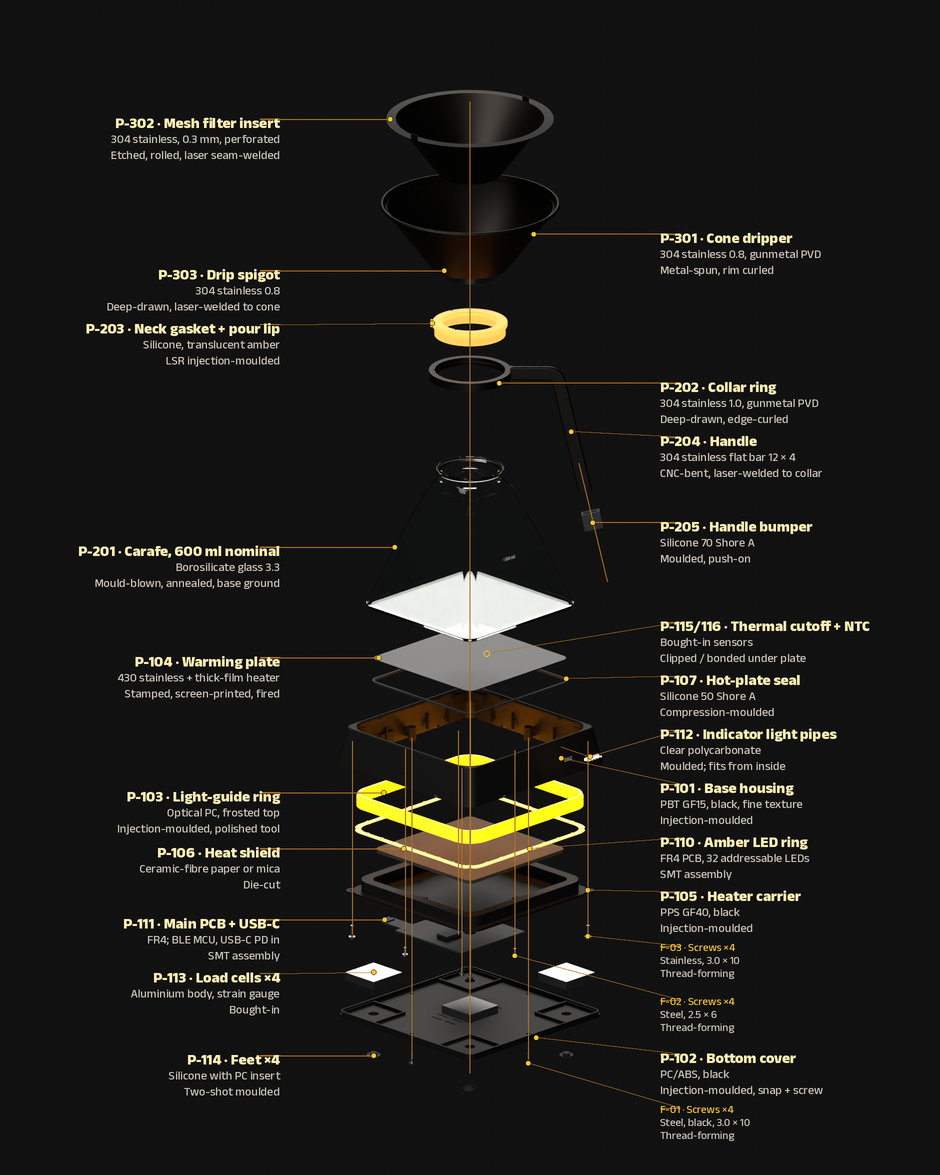
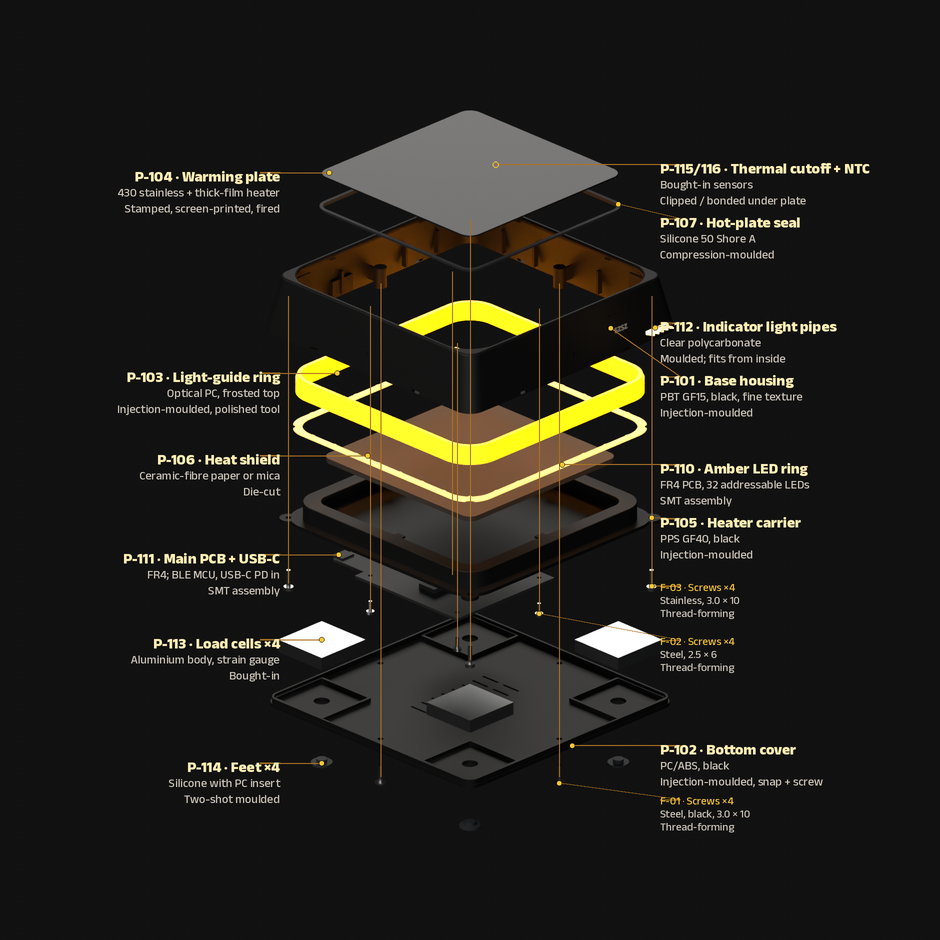
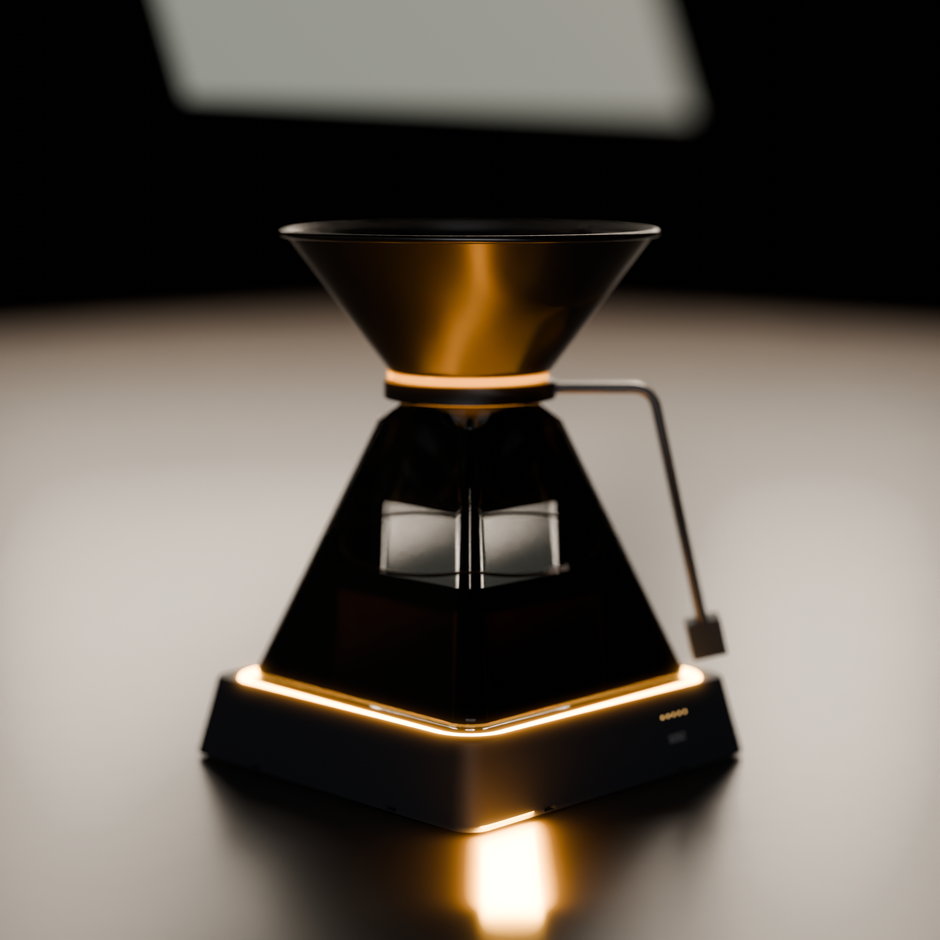
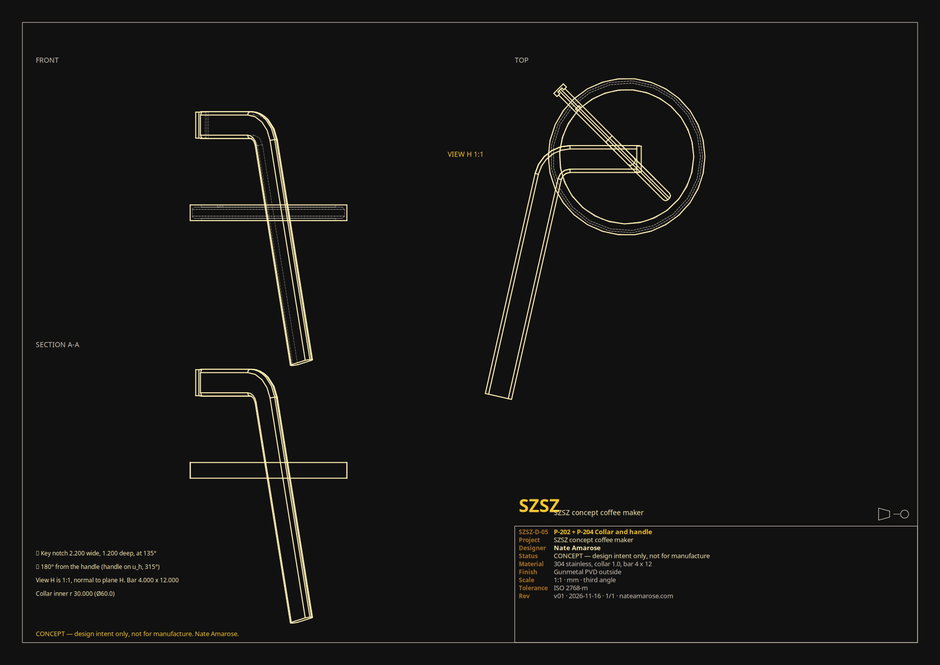
The last step backward was the factory. I took the concept back to the bench and asked what it would take to build it. The answer is an AI-assisted concept engineering pack: three sub-assemblies (base, carafe set and dripper) and 40 physical pieces. A mould-blown borosilicate carafe. A spun stainless cone with a gunmetal finish outside and bare, polished steel where coffee touches it. An injection-moulded base whose clear light guide carries the amber ring. Five part drawings cover the pieces that make SZSZ look like SZSZ: the carafe, the cone, the base housing, the neck gasket and the collar with its handle.
Making it buildable changed the story in places. The glowing band at the carafe's neck can't be powered on a removable glass part, so in the engineered version it's a translucent amber gasket, and it glows only in the render. The app's "cups left" now has a source: load cells under the base. Every one of these guesses is written down so it can be checked.
Midjourney concept
Concept CAD render
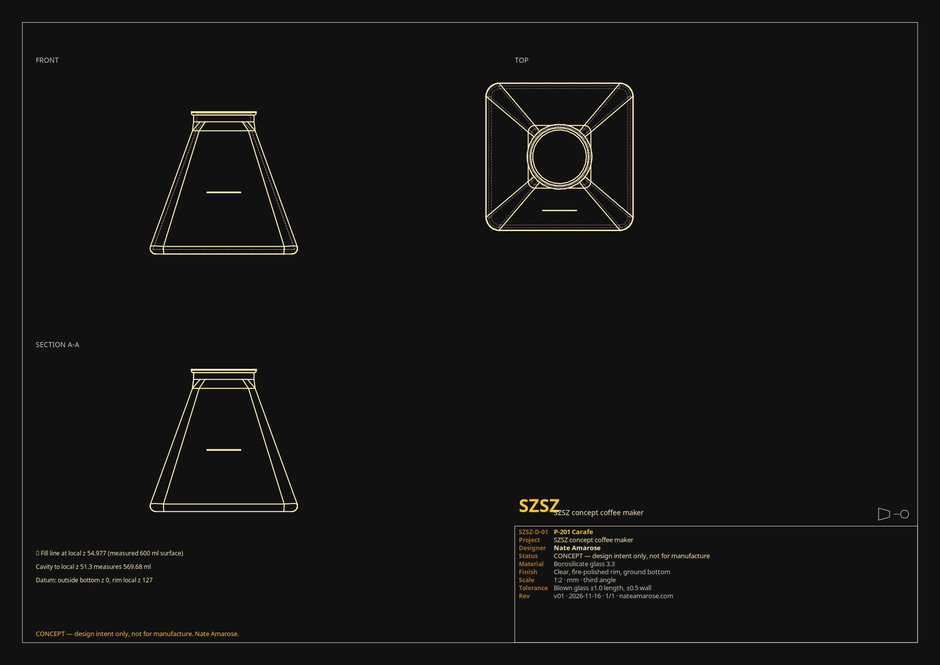
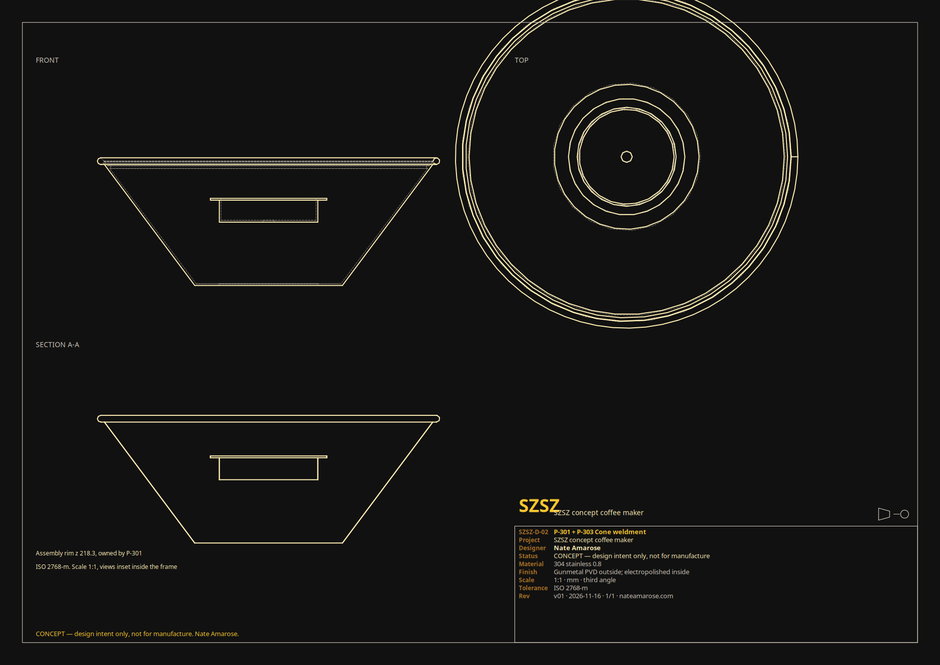
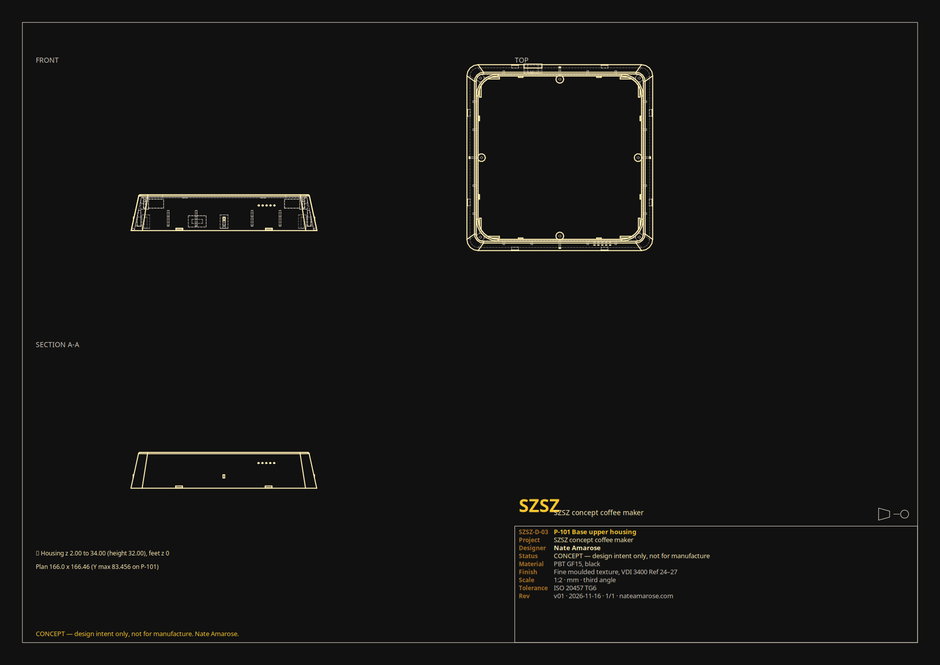
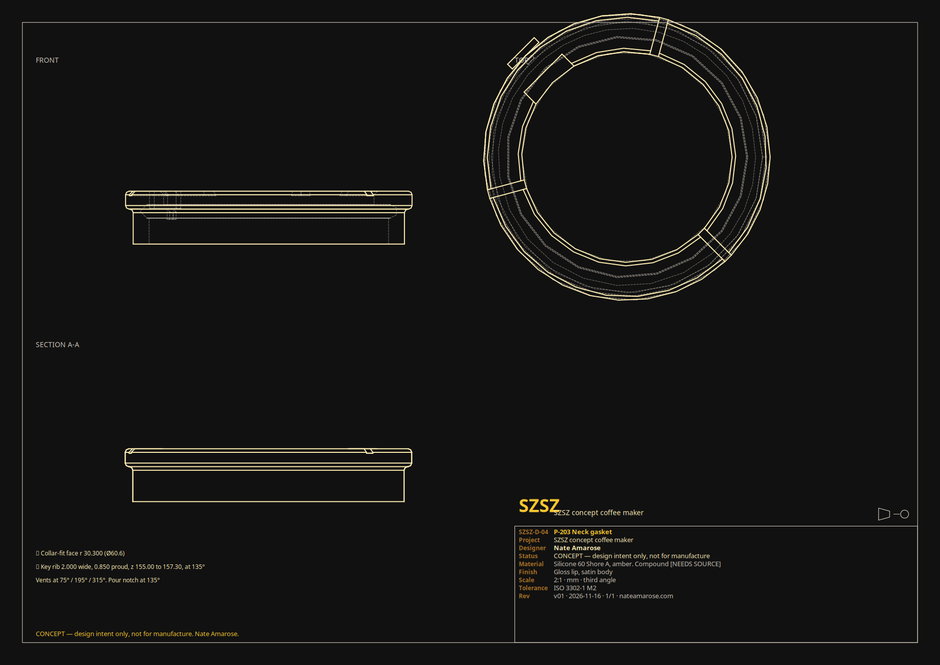
| Part | P/N | Qty | Material | Process |
|---|---|---|---|---|
| A-100 · Base | ||||
| Base upper housing | P-101 | 1 | PBT GF15, black | Injection moulded, submarine gates |
| Base bottom cover | P-102 | 1 | PC/ABS, black | Injection moulded |
| Light-guide ring | P-103 | 1 | PC optical grade, clear | Injection moulded, polished tool |
| Hot plate / thick-film heater | P-104 | 1 | 430 stainless 1.0 + thick-film dielectric/resistor/overglaze | Stamped, screen-printed, fired |
| Heater carrier tray | P-105 | 1 | PPS GF40, black | Injection moulded |
| Heat-shield pad | P-106 | 1 | Ceramic-fibre paper or mica | Die-cut |
| Hot-plate seal | P-107 | 1 | Silicone 50 Shore A, black | Compression or LSR moulded |
| LED ring PCB assembly | P-110 | 1 | FR4 1.0, 2-layer, black mask | SMT PCBA |
| Main PCB assembly | P-111 | 1 | FR4 1.6, 2/4-layer | SMT PCBA |
| Indicator light-pipe comb | P-112 | 1 | PC, clear | Injection moulded |
| Load cell | P-113 | 4 | Aluminium alloy + strain gauges | Bought-in half-bridge |
| Foot | P-114 | 4 | Silicone 60 Shore A, black + PC puck | Two-shot or bonded |
| Thermal cutoff | P-115 | 1 | - | Bought-in one-shot TCO |
| NTC temperature sensor | P-116 | 1 | - | Bought-in |
| Screws | F-01 | 4 | Steel, black, 3.0 × 10 | Thread-forming |
| Screws | F-02 | 4 | Steel, 2.5 × 6 | Thread-forming |
| Screws | F-03 | 4 | Stainless, 3.0 × 10 | Thread-forming |
| A-200 · Carafe set | ||||
| Carafe | P-201 | 1 | Borosilicate glass 3.3 | Mould-blown, fire-polished rim, annealed, bottom ground |
| Collar ring | P-202 | 1 | 304 stainless 1.0 | Deep drawn, edge-curled |
| Neck gasket and pour lip | P-203 | 1 | Silicone 60 Shore A, translucent amber, food-contact grade (compound TBD) | LSR injection moulded |
| Handle | P-204 | 1 | 304 stainless flat bar 12 x 4 | CNC bent, laser-welded to P-202 |
| Handle bumper | P-205 | 1 | Silicone 70 Shore A, black | LSR or compression moulded |
| A-300 · Dripper | ||||
| Cone shell | P-301 | 1 | 304 stainless 0.8 | Metal spun, rim curled, bead roll-formed |
| Mesh filter insert | P-302 | 1 | 304 stainless 0.3, perforated Ø0.2 at 0.5 hex pitch | Photo-etched or laser-perforated, rolled, seam-welded |
| Drip spigot | P-303 | 1 | 304 stainless 0.8 | Deep drawn, pierced, laser-welded to P-301 |
A brand that brews slowly
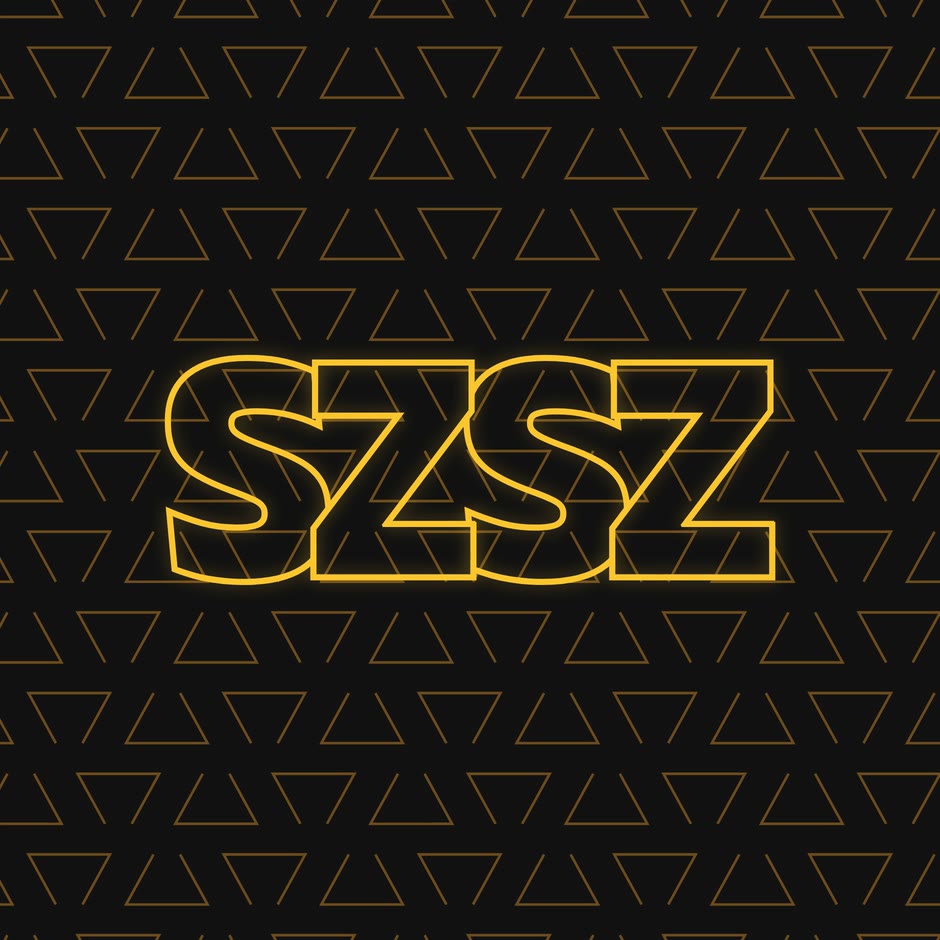
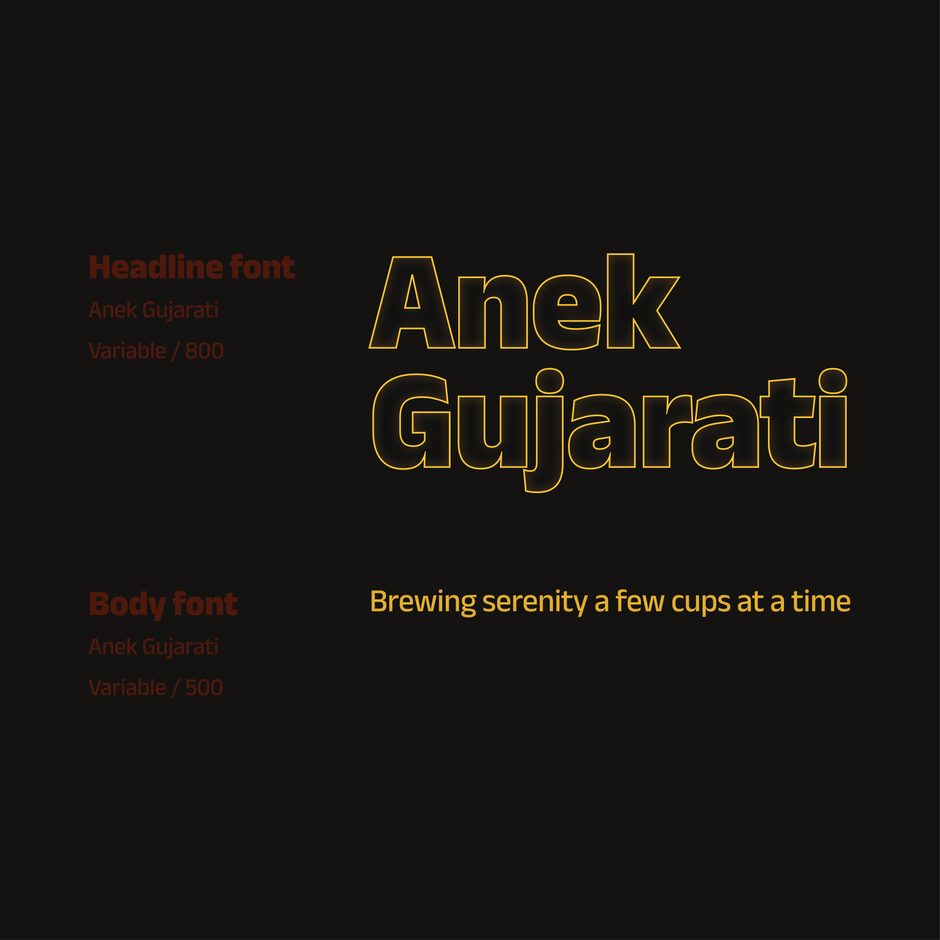
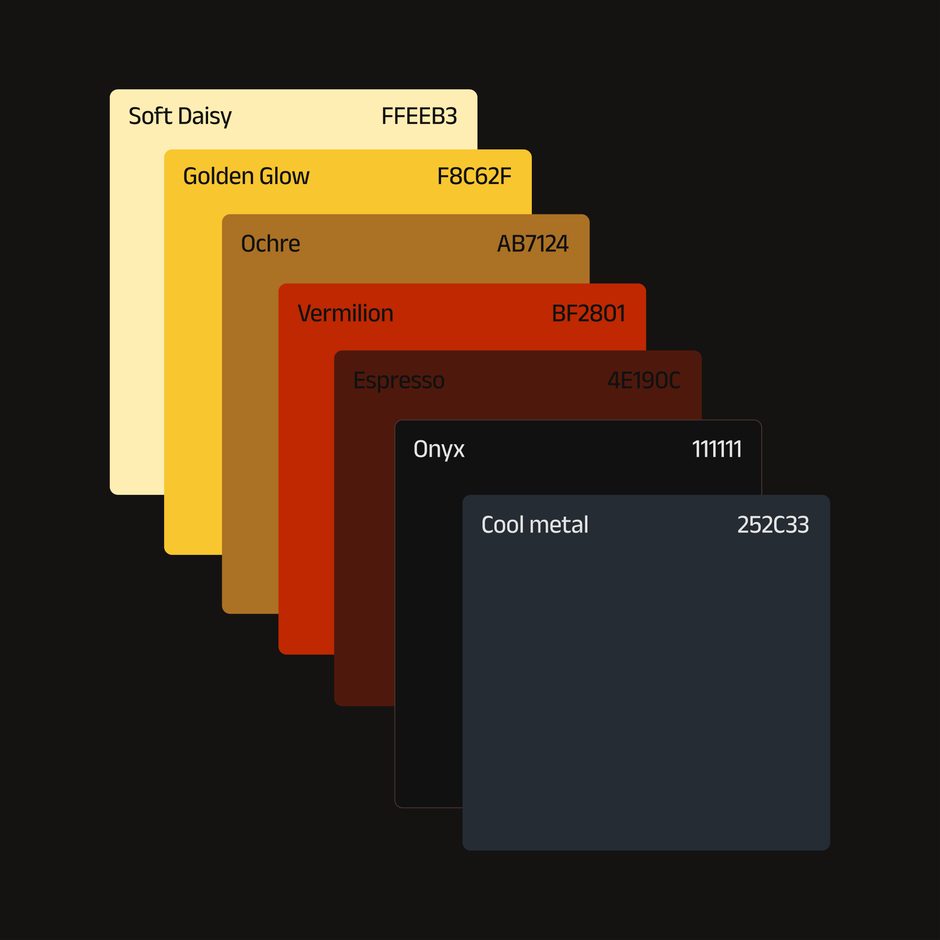
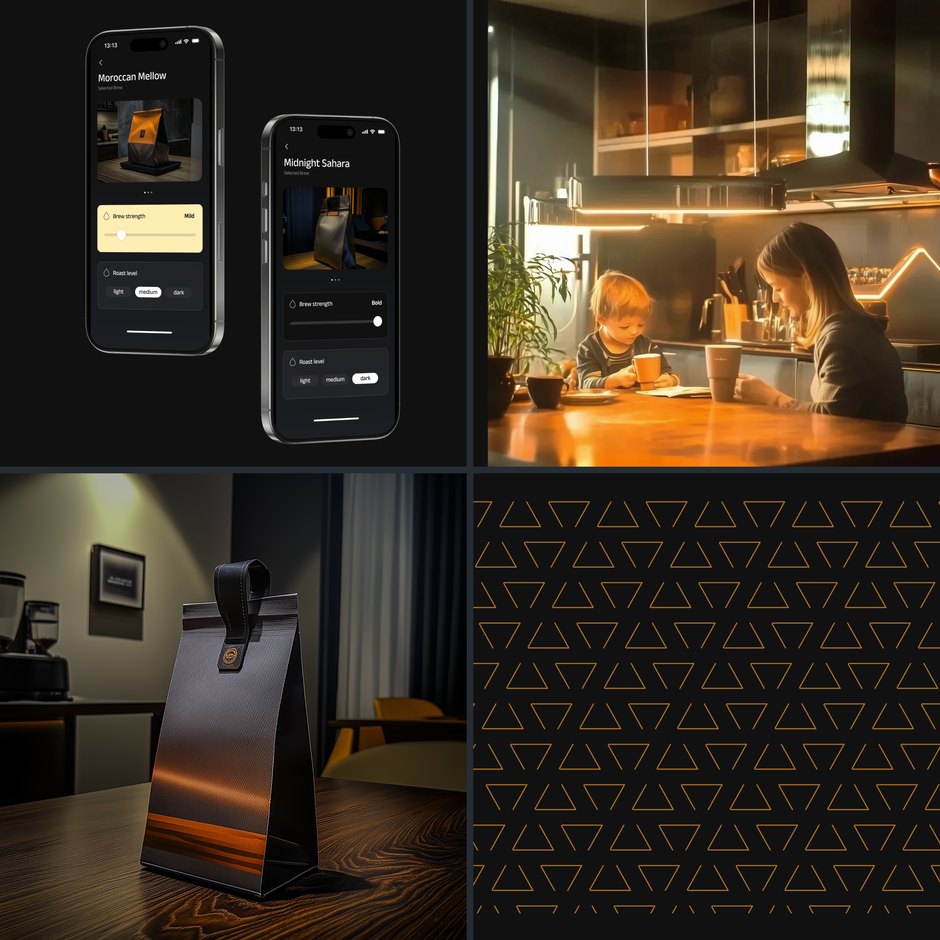
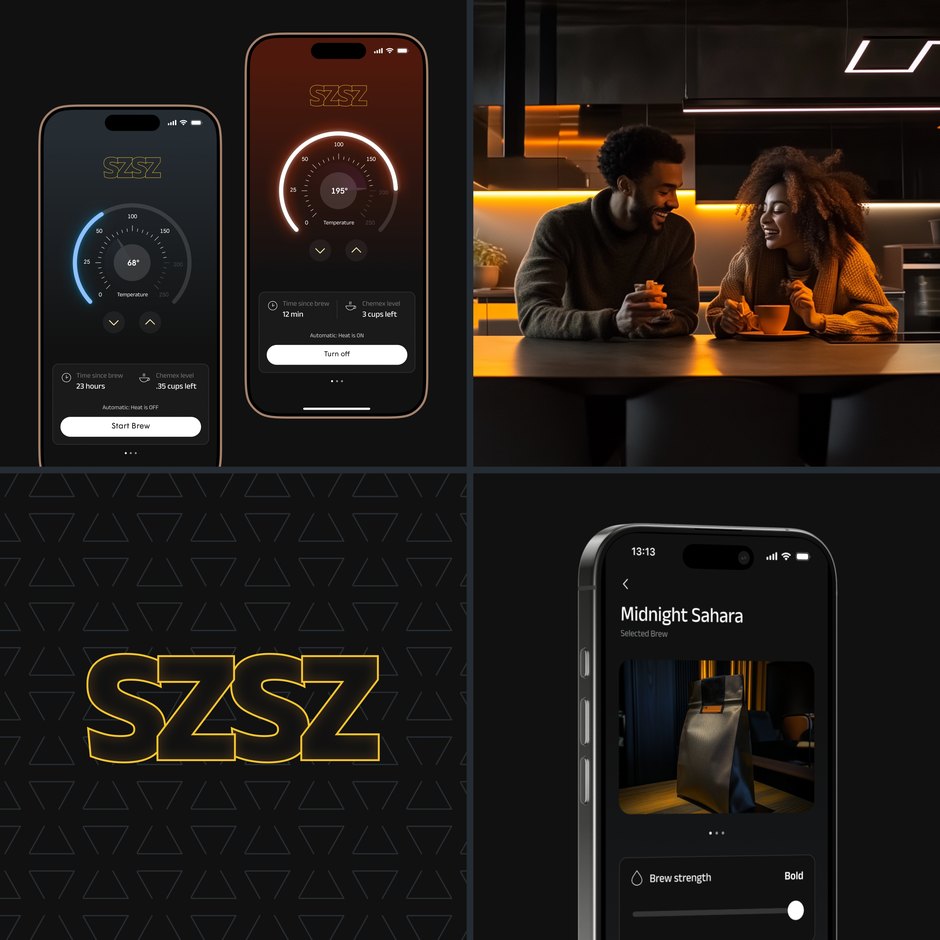
The tagline sets the tone: Brewing serenity a few cups at a time. The hand-drawn wordmark the project started from anchors the system. Its pattern repeats the brewer's triangle across bags, box linings and app backgrounds. Anek Gujarati carries the type system, at 800 for headlines and 500 for body. The palette is named for the drink and the object: Golden Glow, Soft Daisy, Ochre, Vermilion, Espresso, Onyx and Cool Metal.
Bags, box and the counter
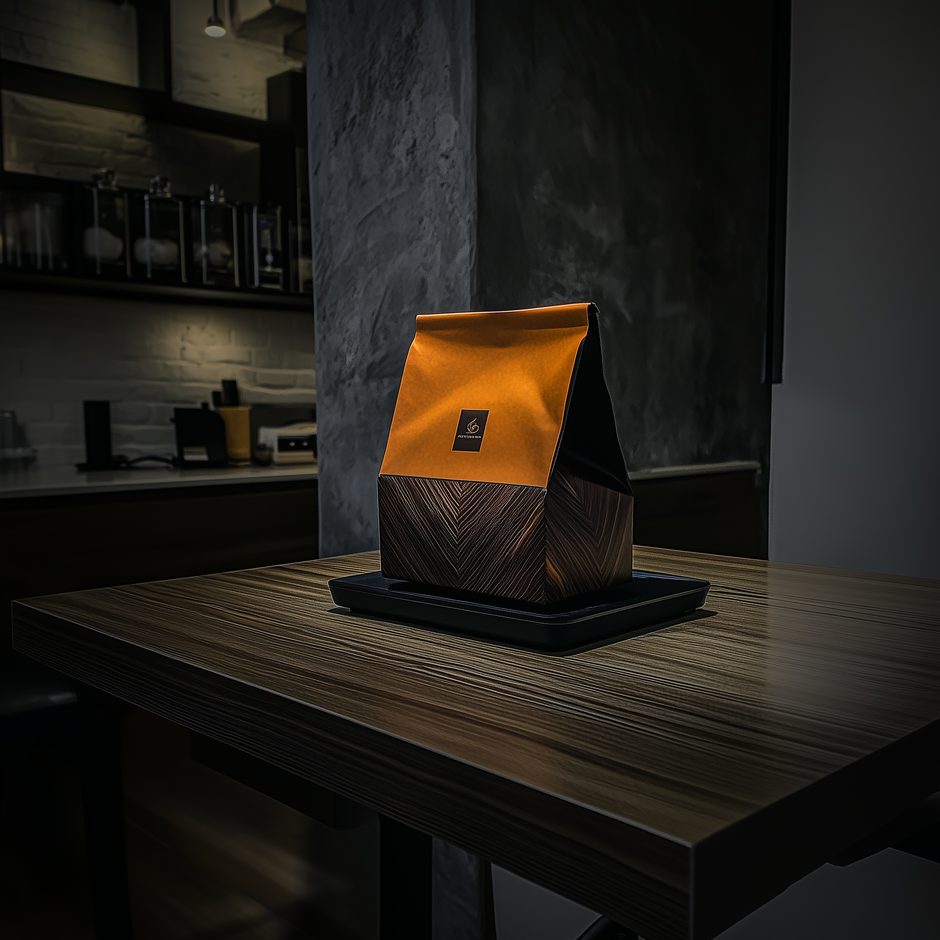
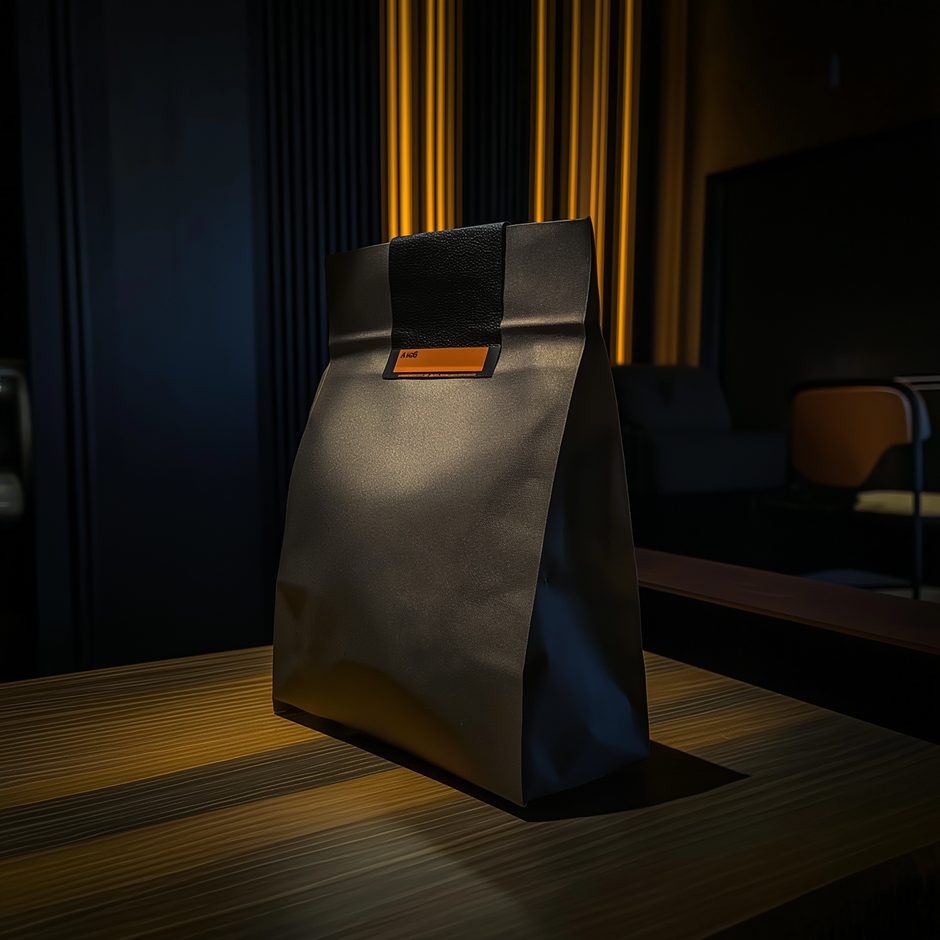
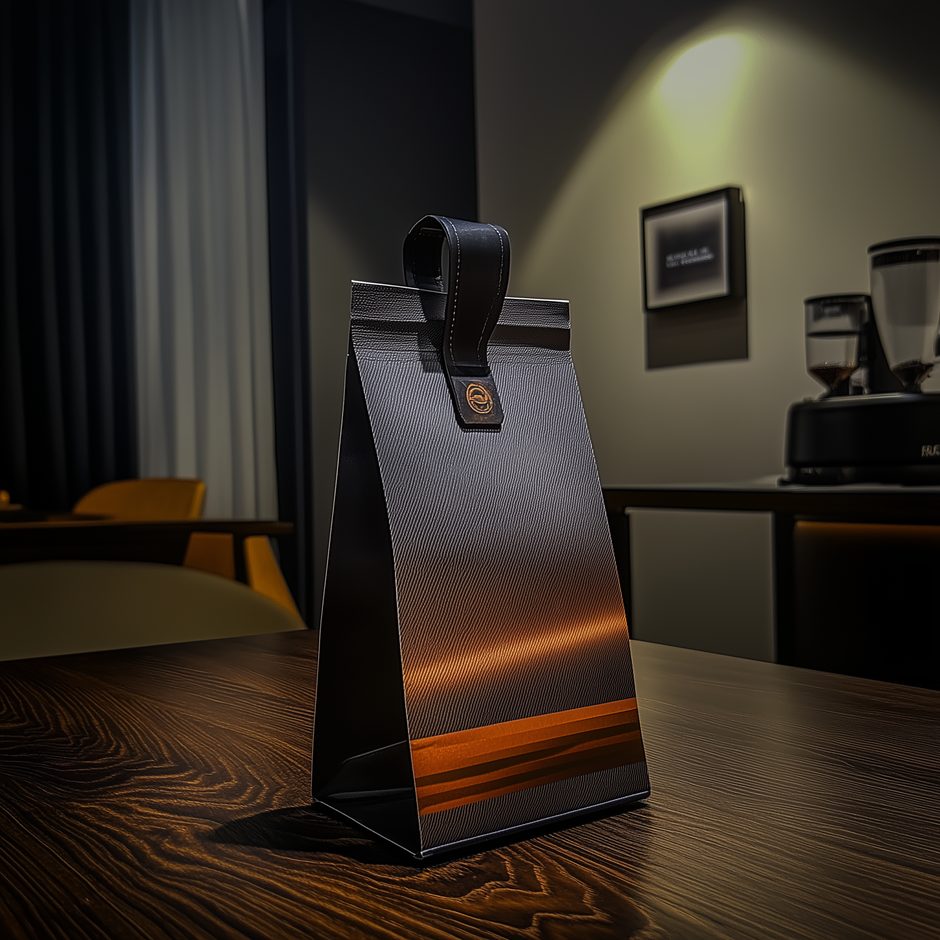
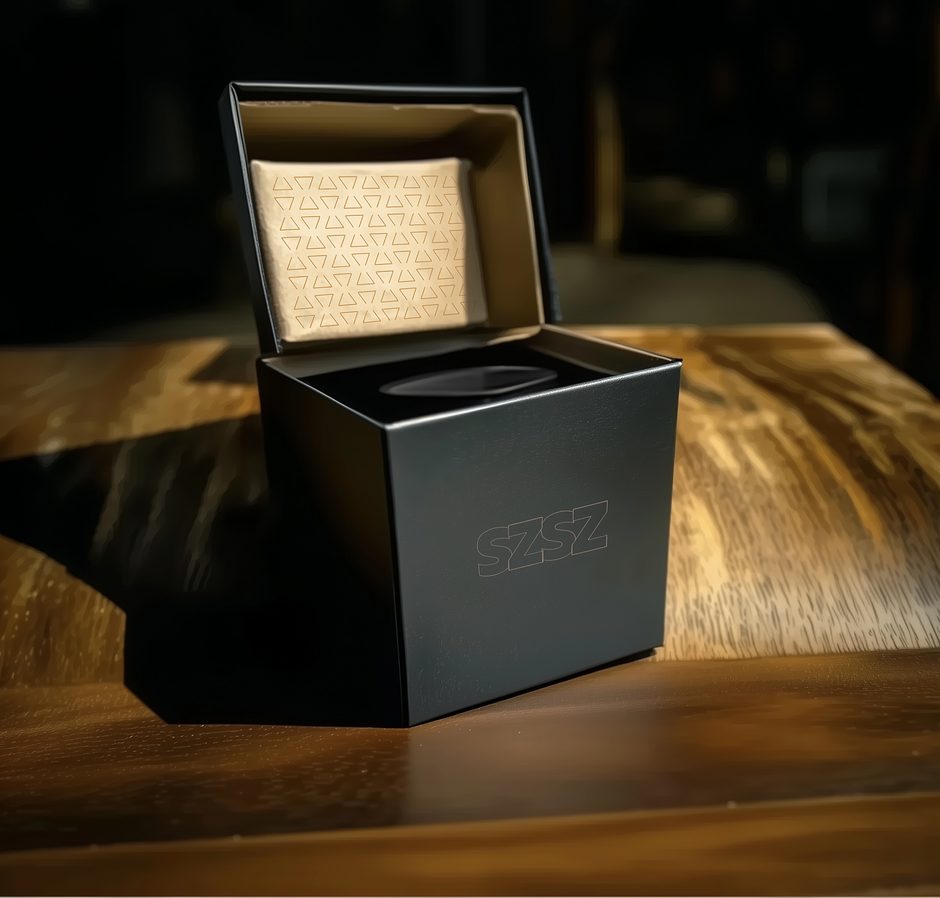
Matte black coffee bags with an amber band and a gift box with a patterned lining extend the brewer's dark, warm look onto the shelf. Midjourney made the bag and box photography. I drew the label system and patterns that dress them.
The brewer in your pocket
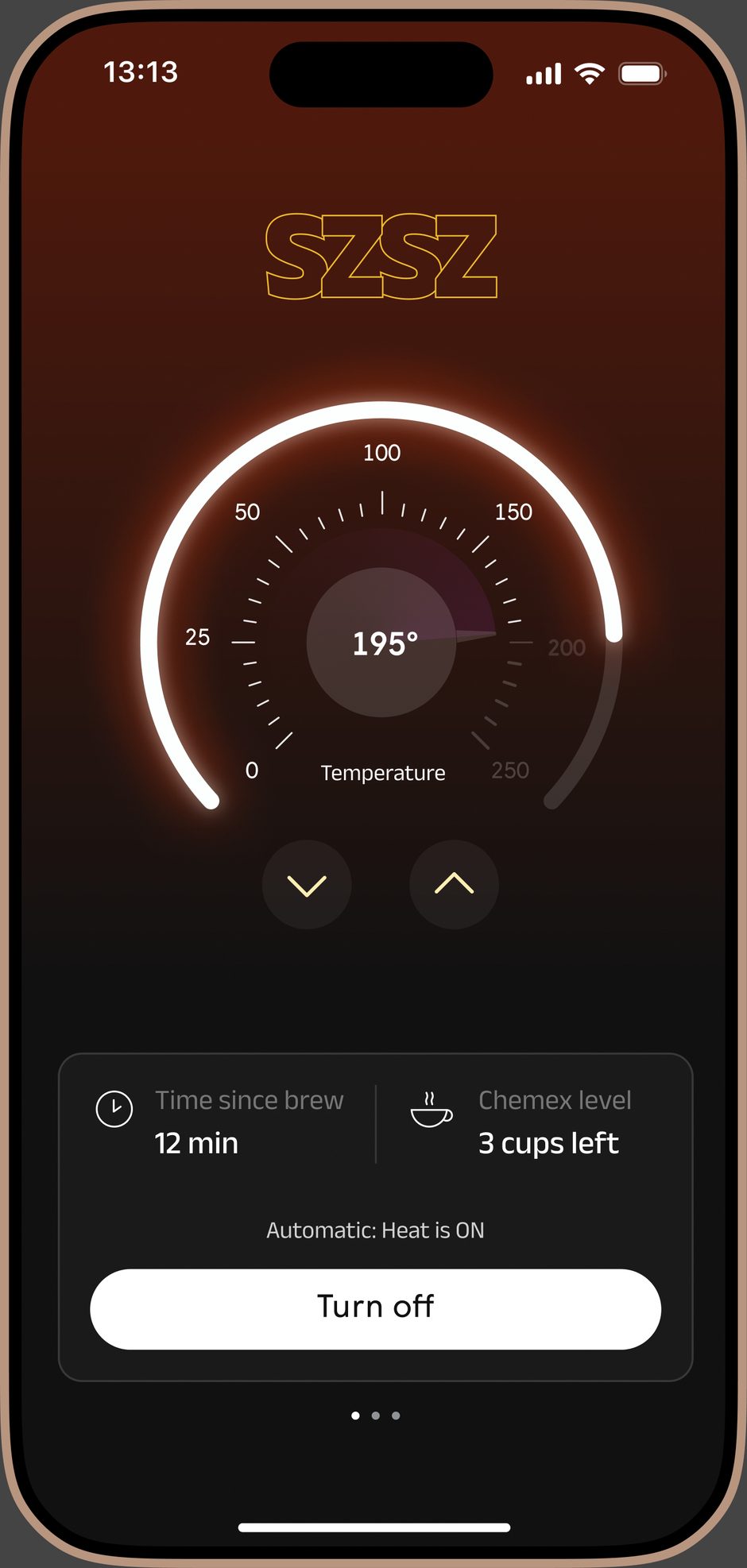
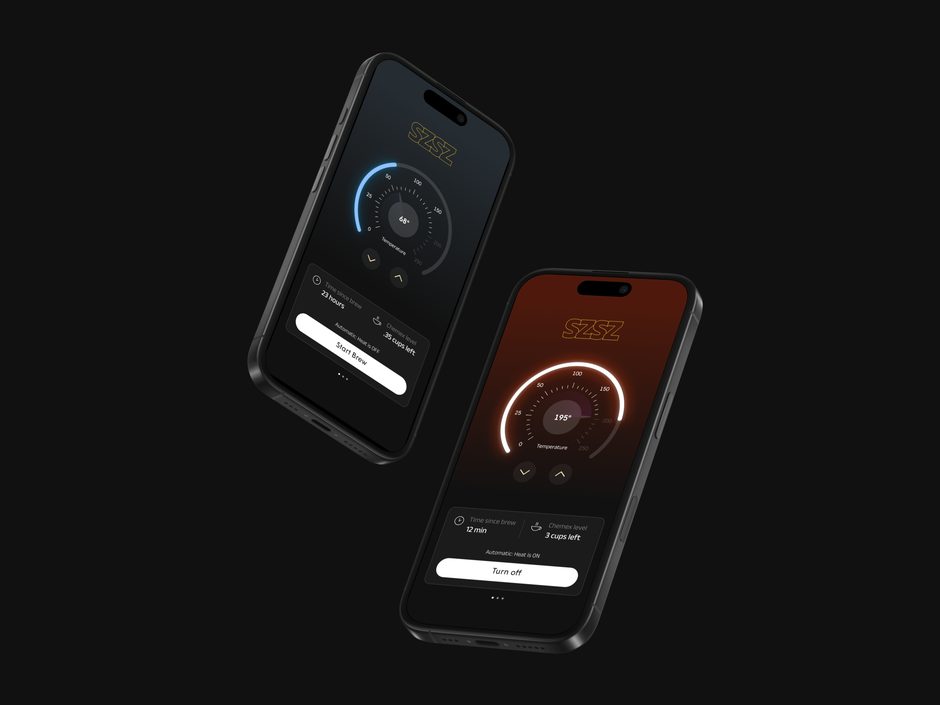
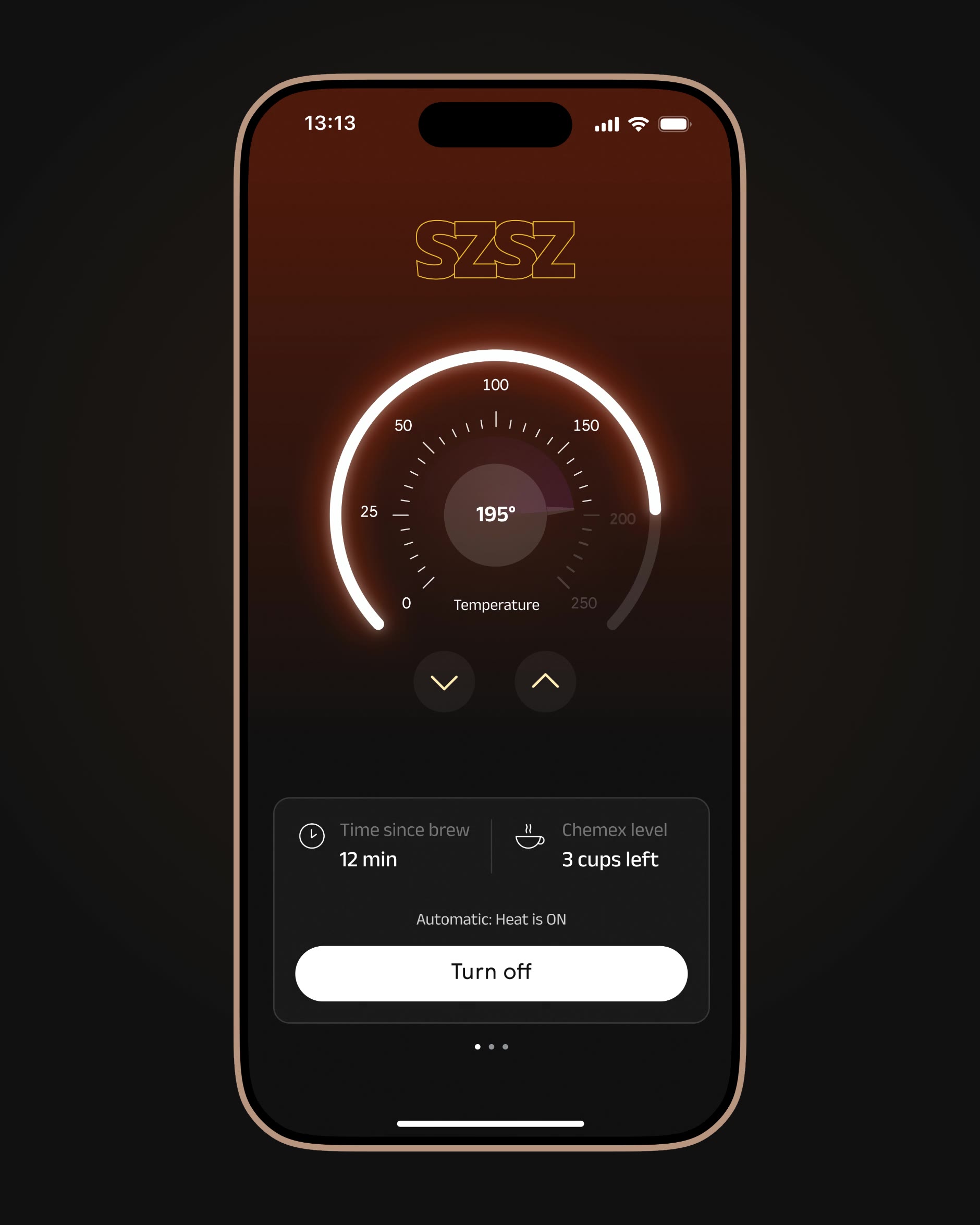
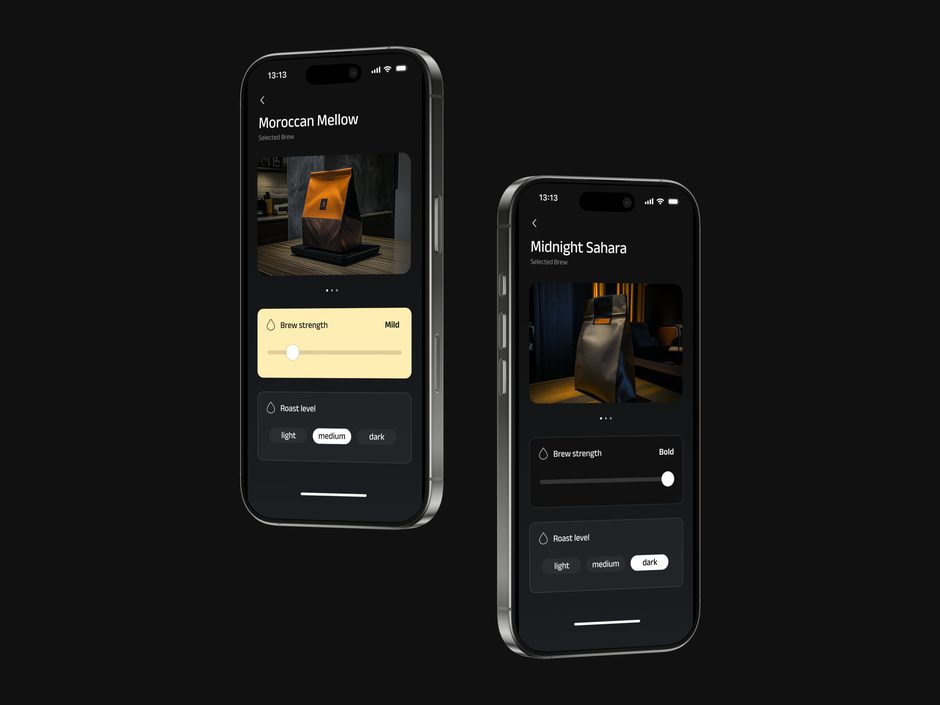
The companion app is built around the brewer's own controls: time since brew, how many cups are left in the carafe, the brew temperature, automatic heat on or off, and one button to start a brew. Saved brews such as Midnight Sahara, Moroccan Mellow and Colombian Crown each keep a roast level and a brew strength from mild to strong.
The pipeline
My hand-drawn wordmark first. Then Midjourney for the brewer's form, the lifestyle photography and the coffee bags. Meshy AI for image-to-3D. Figma for everything I drew: logo, pattern, palette, type, app screens and the presentation. The AI tools covered the parts that used to take a photo shoot and a 3D artist. The decisions that make it a product were mine: which form to keep, what it's made of, how it's used.
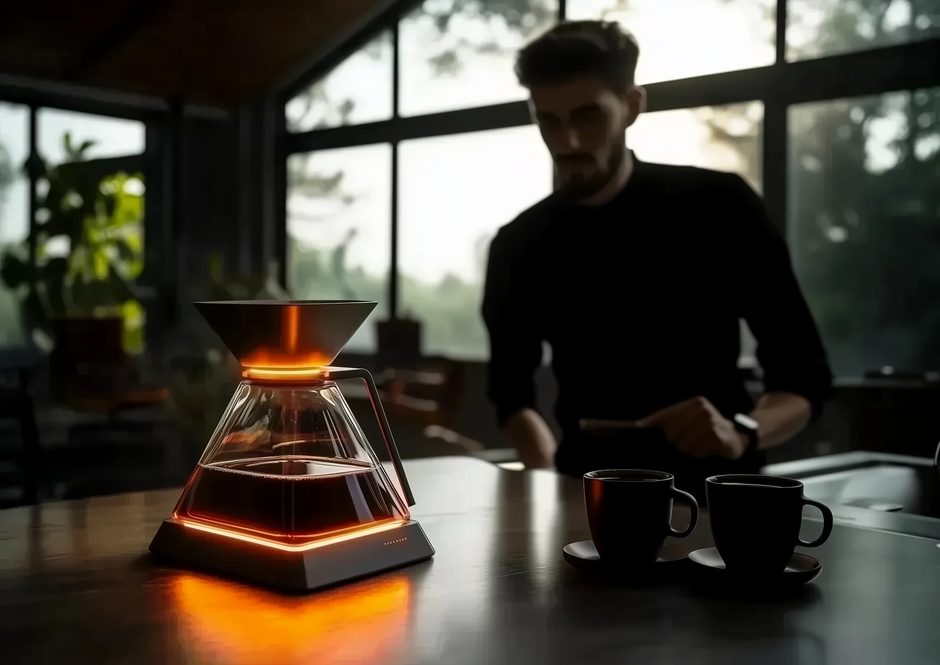
The logo came first and manufacturing came last. The work in between was making one Midjourney form hold up from every side, in every room and on the phone.