
Originally published on Medium, June 2017, while I was working at Plume.
Make Your Idea Plan B: How Product Teams Find the Right Solution Faster
Good ideas don't come from any of us. They come through us. The fastest route to the right design is getting out of the way, alone and as a team.
How do we accept that we may be wrong, yet act confidently enough on subjective decisions? It's a real challenge to create new and novel solutions, especially as development tools keep turning more imagination into reality.
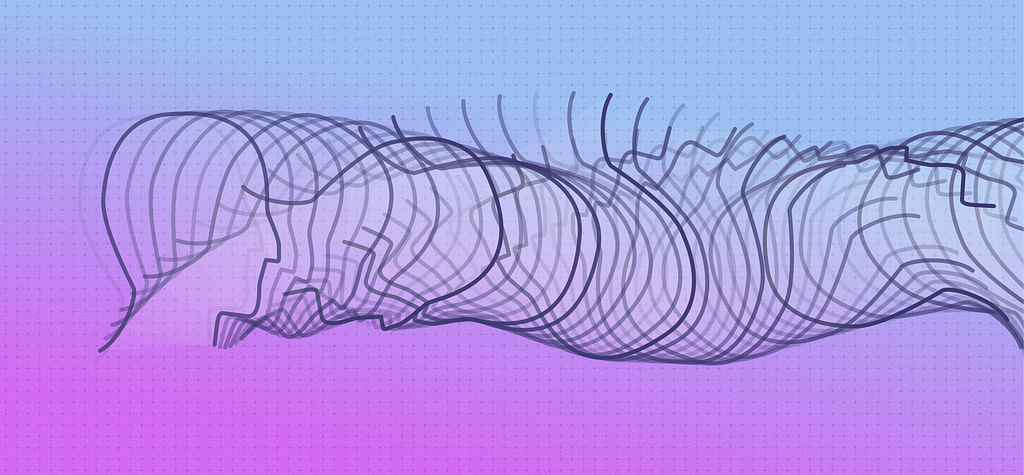
Creativity in its best moments doesn't come from any of us. It comes through us. The path to the right design is found while getting out of the way, in our own minds and collectively as a team. That is designing without ego.
Creativity in its best moments doesn't come from any of us. It comes through us.
Below: how it plays out in a startup design process, and four ways to practice it.
What I mean by ego
There are many ways to describe ego. Here are five working definitions:
- In the west, "the part that thinks highly of one's self."
- The person I consider "me," with a name, an opinion of myself and memories.
- The spoken thought in one's head.
- The part of you that thinks you're an individual.
- The part of you that has anxiety.
Try this:
- Pause in silence and wait for a thought to arise. Where did it come from?
- Try it again and notice what it feels like when a silent mind suddenly produces a thought out of the dark.
- If you choose not to push the thought further, notice how it dissipates back to where it came from.
That's your ego serving you up, involuntarily, like a heartbeat.
With that in mind, here is how it plays out in a typical Silicon Valley startup design process.
Your own work, and team work
When we design without ego in front of our product team, we let creation flow through us into the group. Both individual work and team work speed up when we're intentional, mindful and open. There are times we need the ego to think through a logical decision or solve a problem. Call on the thinking mind then, and know when to let it fall away.
At the desk, alone
This is a chance to let creativity take over our intuition. You've probably had the hours fly by and then discovered something gorgeous you've been working on. Little to no thought occurs in those moments. You're in flow. The ego got out of the way.
In the room with other people
Ideation flows when everyone contributes with no desire to control (external, obvious) and without doubting themselves, questioning motives or taking ownership of an idea (internal, less obvious).
I believe ownership of an idea is the worst way to reach the best design. An idea isn't your identity. It was given to you, which is why it seems to come from nowhere. With everyone allowing creation to flow and using thought only to manage the logistics of the conversation, the product steers itself toward the truth.
I believe ownership of an idea is the worst way to reach the best design.
So back your desires and identity away and let discovery arrive. Do it at the start of a creative effort and through the long, enduring polish of a masterpiece.
Design without ego means:
- not wanting our user test to have particular results
- being joyful when someone points out an oversight in our work
- appreciating disagreement, because it offers more insight and perspective
- focusing together on the path ahead, instead of watching our own feet walk toward a desired solution
Use active thinking when you need it
Design research data is a science, and it should be mined with our brains. For tactical work, chip away at the task list and use the thinking mind to navigate decisions, questions and organization. It helps to roughly schedule the sections of your day: hours for active, vocal thought, hours for open creation, and hours with team members.
Ego and teams
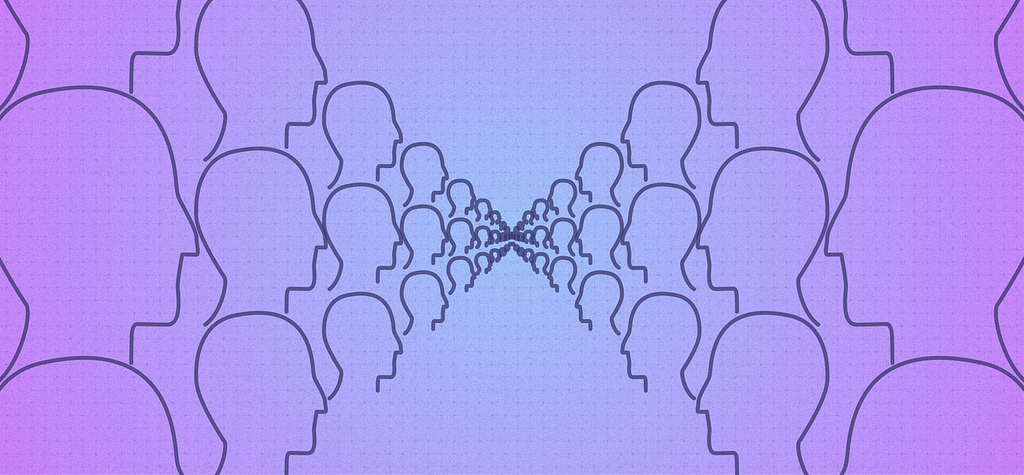
This matters most when you're moving through conflicting opinions, the desire to be favored or validated, and the intense sprint schedules of startup life. It's vital to leave the ego out when cooperating with teammates during the exploration and discovery phase of a feature.
That's why group discovery games help. People set distractions aside during focused activities and the egos melt away. No one's idea is judged, and often no one knows whose idea it was. Teams build something piece by piece, focused on the creation instead of their own contribution.
The sculpting metaphor
Think of a product team as sculpting a solution together. Imagine making an accurate bust of Leonardo da Vinci with colleagues. His real nose had only one shape, so the only debates needed are about evidence for the correct shape. Disagreement stops being an issue because we act like one mind contemplating the answer. Who makes the final call is irrelevant, and focusing on anything but the answer wastes time.
Plan B
We don't need to have all the answers. We need to make ourselves available to the answer. To identify with a design is to risk missing a better one, because the more right we feel, the less additional truth we discover.
To identify with a design is to risk missing a better one, because the more right we feel, the less additional truth we discover.
We don't need to have all the answers. We need to make ourselves available to the answer.
Make your own viewpoint "Plan B," in case a greater truth doesn't show up. The common behavior is the opposite: keep my viewpoint as Plan A unless someone can better it. Holding Plan A creates a ripple effect, because other team members have to compensate for our commitment to an idea, and worse when the ripples come from several directions.
Patience
Have faith and be patient. If the idea is right and all egos are out of the way, the right solution will be inevitable.
The joy of letting go
It's a deceptive challenge. There's a tension between the soul-wrenching quest of creating and detaching your identity from the creation. But that's part of the answer: removing ego also calms the creative quest so it feels less like torture. When we detach from a sense that the creation defines us, it can live on its own, and that gives it a purity that is more beautiful.
Today I'd... (present-day commentary, not part of the 2017 article)
Today I'd apply the same idea to AI-assisted design work. When a model can produce ten variations in minutes, attachment to any one of them is even less useful. I'd treat generated options as raw material for the team's discovery, judge them against evidence from user testing, and keep the quality bar and final decisions with the people accountable for the product.
Next: for how teams turn this into a working habit, see Product thinking, or read Designing for Product Opportunities for how a design team keeps quality moving once the ego is out of the way.